An Englishman in the Balkans cover art

An Englishman in the Balkans

An Englishman in the Balkans

By: David Pejčinović-Bailey MBE
Listen for free

An Englishman in the Balkans is a personal storytelling podcast from David Pejčinović-Bailey, a British broadcaster and former soldier who has made his home in Bosnia and Herzegovina. , From village walks and quiet reflections to conversations about culture, history, travel, retirement abroad, and life after 70, this podcast offers a warm, honest and often thoughtful look at Bosnia and the wider Balkans through British eyes. This is not a glossy travel brochure, and it is not a relocation manual. It is a slower, more personal journey through everyday life in a country that is still too often misunderstood. Each episode brings you stories, observations and reflections from rural Bosnia, exploring what it means to start again later in life, live between cultures, and find meaning in small places, quiet roads, shared coffee, changing seasons and unexpected conversations. If you are interested in Bosnia and Herzegovina, the Balkans, retired life abroad, expat stories, slow travel, or simply thoughtful audio storytelling from a British voice in Southeast Europe, you are very welcome here. An Englishman in the Balkans, a British voice from Bosnia, telling stories from life beyond the usual headlines.David Pejčinović-Bailey MBE 2026 Social Sciences Travel Writing & Commentary
Episodes
  • How I Was Humbled on the Hills Above Kakanj | A British Voice from Bosnia
    Apr 18 2026

    An Englishman in the Balkans is a personal podcast about life, travel, culture, and storytelling in Bosnia and Herzegovina, told from the perspective of a British-born creator who has made this country home.

    Expect gentle reflections, real places, local voices, field recordings, and stories that go beyond the usual headlines.

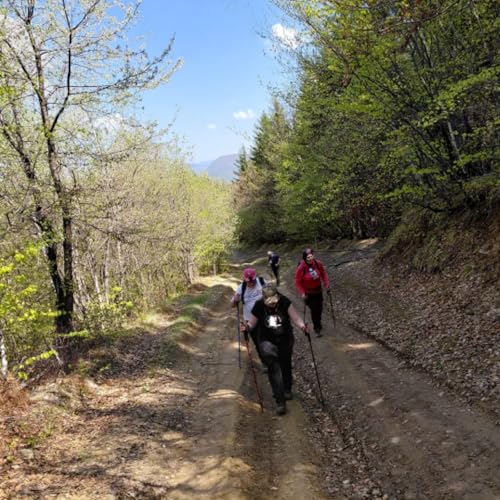
    I had planned to make a simple hiking story from the hills above Kakanj in central Bosnia. A scenic walk with our hiking club, a few thoughtful voice notes, some views towards Vlašić, and the sounds of boots, birdsong, and conversation along the way.

    Bosnia had other ideas.

    This episode is about a 13.5 kilometre hike that quickly became something much more personal: a lesson in preparation, aging, stubbornness, and humility. From a too-heavy rucksack and the wrong trousers to unforgiving hills, aching knees, and schoolchildren who seemed to float up the climbs, it reminded me that walking every day is not quite the same as hiking in Bosnia.

    It is also a story about community, kindness, and the strange satisfaction of reaching the end when, somewhere along the route, you quietly wondered whether you would.

    If you enjoy these stories from Bosnia and Herzegovina, you can find more at:

    Website: https://www.anenglishmaninthebalkans.com

    Substack: https://coffeeandrakija.com

    YouTube: A British Voice in Bosnia with David Bailey

    Interested in starting your own podcast later in life?

    My self-paced course, Start With Your Voice, is designed for late creators who want a calm and simple way to begin:

    https://www.anenglishmaninthebalkans.com/course/welcome-to-start-with-your-voice

    Show More Show Less
    20 mins
  • Inside Tito’s Secret Bunker | A British Voice from Bosnia
    May 16 2026

    An Englishman in the Balkans is a personal podcast about life, travel, culture, and storytelling in Bosnia and Herzegovina, told from the perspective of a British-born creator who has made this country home.

    Expect gentle reflections, real places, local voices, field recordings, and stories that go beyond the usual headlines.

    There are some places in Bosnia and Herzegovina that do not reveal themselves straight away.

    During a recent two-and-a-half-day road trip through Bosnia and Herzegovina with Tamara and my granddaughter Alice, we stopped near Konjic for what I thought would be a quick visit and a few photographs.

    Instead, within minutes, we were stepping through a doorway into one of the most secretive places ever built in the former Yugoslavia.

    Hidden beneath a mountain near Konjic lies Tito’s Bunker, officially known as ARK D-0. Built during the Cold War for Josip Broz Tito and Yugoslavia’s military and political leadership, it was designed as an underground atomic war command shelter.

    Above ground, life carried on as normal. The Neretva River flowed through Konjic, people drank coffee in cafés, and traffic moved along the road between Sarajevo and Mostar.

    Beneath the surface, though, was another world entirely.

    Construction began in 1953 and continued until 1979. Built in complete secrecy, the bunker was designed to shelter around 350 people for months in the event of nuclear war.

    From the outside, there is very little drama. That is part of what makes it so fascinating. The entrance appears almost ordinary, tucked into the landscape with no great military spectacle.

    Then you walk through the doors.

    Long corridors stretch ahead. Heavy doors separate room after room. Pipes run overhead. Offices, communications rooms, dormitories, generators, filtration systems, kitchens, and medical spaces sit deep inside the mountain.

    It feels less like a bunker and more like a secret underground city.

    What struck me most was that this was not simply a military installation. It was a mindset poured into concrete. A reminder of just how seriously the Cold War was taken in this part of the world.

    One of the things I often say about Bosnia and Herzegovina is that history here rarely sits politely behind glass. It presses in from all sides.

    Tito’s Bunker feels exactly like that.

    The small details stay with you: the telephones, the furniture, the faded colours on the walls, the offices frozen in time. You stop seeing history as something abstract and suddenly it becomes touchable and strangely human.

    Tito himself remains a complicated figure across the former Yugoslavia. To some, he represented stability and independence during a tense period of global politics. To others, he represented control and silence under a one-party state.

    If you enjoy these stories from Bosnia and Herzegovina, you can find more at:

    Website: https://www.anenglishmaninthebalkans.com

    Substack: https://coffeeandrakija.com

    YouTube: A British Voice in Bosnia with David Bailey

    Interested in starting your own podcast later in life?

    My self-paced course, Start With Your Voice, is designed for late creators who want a calm and simple way to begin:

    https://www.anenglishmaninthebalkans.com/course/welcome-to-start-with-your-voice

    Show More Show Less
    14 mins
  • When a Broken Bridge Says Everything About Bosnia | A British Voice from Bosnia
    May 23 2026

    An Englishman in the Balkans is a personal podcast about life, travel, culture, and storytelling in Bosnia and Herzegovina, told from the perspective of a British-born creator who has made this country home.

    Expect gentle reflections, real places, local voices, field recordings, and stories that go beyond the usual headlines.

    How a damaged border crossing at Gradiška became a symbol of political delay, economic frustration, and everyday life made harder than it needs to be in Bosnia and Herzegovina.

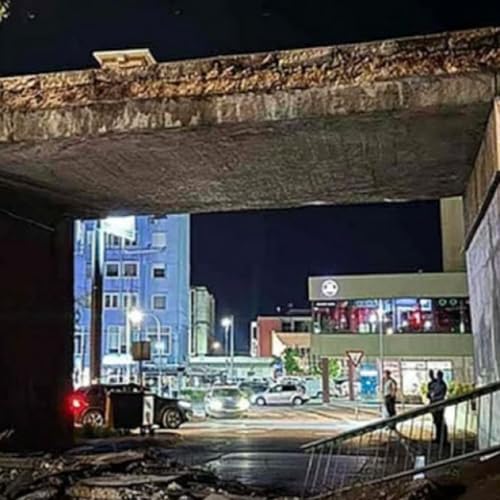
    The damaged bridge at Gradiška is one of those stories that seems to explain far more than the event itself.

    On the surface, it is about the old bridge over the Sava River between Bosnia and Herzegovina and Croatia. It is about stopped traffic, diverted lorries, long queues, and drivers losing hours at alternative crossings.

    But beneath that, it is about something bigger: politics, frustration, and the gap between what Bosnia and Herzegovina could do, and what its political system too often allows it to do.

    For those of us in the Banja Luka region, Gradiška is not just another border crossing. It is one of the main routes north into Croatia, the European Union, and the wider European road network. Families, hauliers, exporters, tourists, workers, and the Bosnian diaspora all depend on it.

    So when Gradiška stops working properly, it becomes more than a local inconvenience. It becomes an economic and human problem.

    On 19 May 2026, traffic was suspended at the Gradiška–Stara Gradiška crossing after part of the protective fence on the bridge over the Sava collapsed, creating a serious safety risk. Thankfully, no injuries were reported.

    But the disruption was immediate. Traffic was diverted, queues grew, and reports described trucks waiting up to 16 hours at alternative crossings.

    That means lost money, lost working time, delayed goods, missed appointments, and frustrated families.

    And this is where the story becomes especially frustrating.

    There is already a new Gradiška bridge and border crossing infrastructure. After the old bridge problem forced action, traffic was temporarily redirected there, valid until 19 August 2026.

    Which leaves the obvious question.

    If traffic could be moved there in an emergency, why did it take an emergency?

    Bosnia and Herzegovina is full of capable people who understand why a crossing like Gradiška matters. The problem is rarely a lack of intelligence. It is a political culture where practical solutions become trapped in arguments over institutions, authority, revenue, responsibility, and blame.

    A bridge is supposed to connect people.

    But at Gradiška, it has also shown the cost of delay, division, and political point scoring.

    And once again, the bill is not paid by those making the speeches.

    It is paid by the driver in the queue, the business waiting for goods, the family delayed at the border, and a country losing time it cannot afford to waste.

    If you enjoy these stories from Bosnia and Herzegovina, you can find more at:

    Website: https://www.anenglishmaninthebalkans.com

    Substack: https://coffeeandrakija.com

    YouTube: A British Voice in Bosnia with David Bailey

    Interested in starting your own podcast later in life?

    My self-paced course, Start With Your Voice, is designed for late creators who want a calm and simple way to begin:

    https://www.anenglishmaninthebalkans.com/course/welcome-to-start-with-your-voice

    Show More Show Less
    14 mins
adbl_web_anon_alc_button_suppression_t1
No reviews yet