CHITHEADS with Jacob Kyle (Embodied Philosophy) cover art

CHITHEADS with Jacob Kyle (Embodied Philosophy)

CHITHEADS with Jacob Kyle (Embodied Philosophy)

By: Jacob Kyle
Listen for free

Chitheads is a smorgasbord of contemplative education. Each episode is like a mini masterclass, exploring the diverse landscapes of spiritual practice, philosophy, and the transformative power of embodied knowledge. Each episode is crafted with the curious and open heart in mind, aiming to illuminate the path of self-inquiry and empowerment for yoga teachers, scholar-practitioners, meditators and other spiritual seekers and contemplative folks from around the world. From the profound teachings of Yoga and Buddhism to the sometimes complex theories of contemplative psychology and the vibrant tapestry of indigenous wisdom, our guests share insights that awaken, challenge, and inspire. With every episode, we dive into discussions that matter, exploring questions that guide us closer to our true selves and to a deeper understanding of the world around us. Our mission is to create a space where wisdom (and not fame, power, or money) is the center of gravity and what we are most concerned about cultivating in this lifetime. Join us on Chitheads as we explore the liminal spaces of consciousness, embrace the complexities of the human experience without dogma or self-righteousness, and discover the beauty again and again of the interconnectedness of all things. Subscribe to Chitheads on YouTube and your favorite podcast platform, and please consider leaving us a positive review on one iTunes, or your favorite podcast player. Come dive into these in-depth conversations that illuminate our path of contemplative discovery. If you’ve felt like you’re the only one full of chit – full of consciousness or awareness ˀ– welcome home. This community of listeners, seekers, and scholar-practitioners is for you.Copyright Embodied Philosophy Hinduism Philosophy Social Sciences Spirituality
Episodes
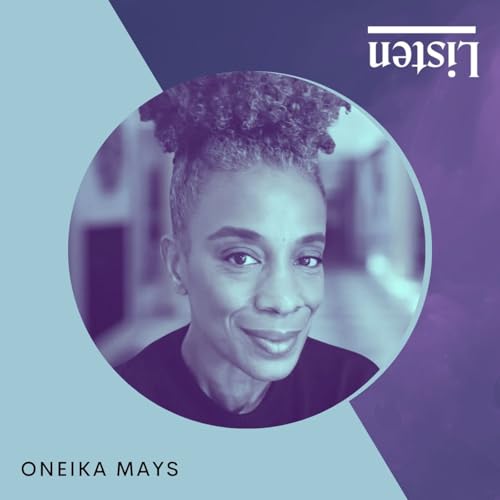
  • No B.S. Loving Kindness with Oneika Mays
    Jun 8 2026
    What does it really mean to practice loving kindness — not as a spiritual platitude, but as the radical act of meeting yourself and others with unconditional ease?Is metta just wishful thinking, a form of spiritual bypassing, or something far more demanding and transformative than modern wellness culture tends to acknowledge?In this wide-ranging conversation, Jacob Kyle sits down with meditation teacher and author Oneika Russell to explore metta — loving kindness — as a living practice of self-recognition, accountability, and opening. Drawing from Oneika's decades of practice and teaching, including six years of volunteer and full-time work at Rikers Island, and her newly released book Sit With Me: A No-BS Journey to Mindfulness and Meditation, the discussion moves through the philosophy of unconditional friendliness, the difference between liking and loving, and what it truly means to begin with yourself.Together, they examine the four Brahmavihāras — loving kindness, compassion, sympathetic joy, and equanimity — the practice of metta as a radically political act, and why genuine transformation requires sitting with what's in the way, not leaping over it. The conversation also explores Oneika's journey from bookstore worker to prison chaplain to author, the challenge of writing accessibly without losing depth, the tension between personal practice and systemic complicity, and why nuance may be the most urgent spiritual capacity we need right now.At its core, this episode treats metta not as a feel-good meditation technique, but as a practice of honest reckoning — one that asks us to extend the same tenderness to those who frustrate us as we offer to those we love, and to recognize that how we meet ourselves shapes how we meet the world.Discussed in This Episode: Why metta is not affirmation — and what makes it a gesture rather than a declarationThe crucial difference between liking and loving, and why it matters for how we show up politicallyWhat it means to work with the difficult person — and why it frees us more than it helps themThe four Brahmavihāras: metta, karuna, mudita, and equanimity — and why equanimity is a place, not a stateThe familiar stranger practice and how it dissolves the boundary between in-group and out-groupWhy practicing without attachment to outcome is both the hardest and most essential instructionOneika's six years at Rikers Island — what she gained, what it cost, and when she knew it was time to leaveHow metta practice and the George Floyd uprisings collided in Oneika's understanding of complicityThe danger of progressive movements using the master's toolsBeginner's mind as a practice for seasoned practitioners — and why skipping foundational wisdom is its own trapWriting as a portal: what Oneika discovered about grief, self-celebration, and the intellectual bypassWhy accessibility is not a lesser form of teaching — and how it became Oneika's laneOn Susannah Rubin: grief, ancestry, and the wisdom we leave behind–––––To deepen your knowledge of yoga philosophy, grab our Yoga Philosophy Reading List, a curated PDF of all the books that will give you a comprehensive overview of the yoga philosophical traditions.GET YOUR LIST HERE: https://enroll.embodiedphilosophy.com/yp-list––––– 30-DAY SĀDHANA: 30 Days of Practices to help refine the nervous system, alleviate negative patterns, and foster a contemplative and spiritually-informed life.MANTRA Sādhana: https://enroll.embodiedphilosophy.com/30-day-sadhanaCHAKRA Sādhana: https://enroll.embodiedphilosophy.com/chakra-sadhanaOr join Sādhana School to enroll in all of our sādhanas held throughout the year. To check that out, go here: https://enroll.embodiedphilosophy.com/sadhana-school-2025-2026-25 ––––– WISDOM SCHOOL:Over 100 courses (1000+ hours) in yoga, meditation, somatics, and dharma studies for spiritual seekers, yoga teachers and, body workers, healers and therapists.Features:→ A new course every month on a variety of topics→ Learning pathways that help you digest the content→ Weekly study emails→ Interactive member spacehttps://enroll.embodiedphilosophy.com/wisdom-school ––––– THE INDIAN DARSÁNASTwelve Schools of Indian Philosophy Explained SimplyDownload PDF here: https://enroll.embodiedphilosophy.com/twelve-schools
    Show More Show Less
    1 hr and 8 mins
  • Kuṇḍalinī as the Power of Self-Recognition with Igor Kufayev
    May 21 2026
    What does it really mean to understand Kuṇḍalinī — beyond the myths, the misconceptions, and the mass-market awakenings? Is it a spontaneous physiological event, an irreversible shift in consciousness, or something far more subtle, rare, and demanding than modern spiritual culture acknowledges? In this wide-ranging conversation, Jacob Kyle sits down with Igor Kufayev to explore Kuṇḍalinī as the living power of self-recognition within Kashmir Śaivism. Drawing from Igor's decades of study, practice, and his newly released book Kundalini: The Goddess as the Power of Self-Recognition in Tantric Śaivism, the discussion moves through the philosophy of the goddess, the subtle anatomy of rising, and the radical difference between heightened pranic activity and genuine Kundalini awakening. Together, they examine the three Kuṇḍalinīs — Parā, Cit, and Prāṇa — the six nāḍīs through which Kuṇḍalinī may ascend, and why true awakening involves an irreversible dismantling of the individual sense of self. The conversation also explores the legacy of Lillian Silburn's Kuṇḍalinī: The Energy of the Depths, the esoteric dilemma of disseminating sacred knowledge, the painful rising of Ganapati Muni, and why the Shaiva approach differs fundamentally from the warrior-like methods of Hatha yoga. At its core, this episode treats Kuṇḍalinī not as a trending awakening experience, but as the very power of consciousness itself — the goddess who both conceals and reveals, and whose movement toward liberation unfolds on her own terms, in her own time. Discussed in This Episode: Why genuine Kuṇḍalinī awakening is far rarer than modern culture suggestsThe difference between heightened prāṇic activity (prāṇa-śakti) and true Kuṇḍalinī risingWhat irreversible synaptic rewiring really means in the context of awakening The three Kuṇḍalinīs: Parā, Chit (Śakti), and Prāṇa KuṇḍalinīThe six nāḍīs of ascent — and why only three are considered safe and appropriateThe case of Ganapati Muni and the danger of unprepared or misdirected risingWhy Lillian Silburn's Kuṇḍalinī: Energy of the Depths is both indispensable and potentially harmfulThe tension between scholarly dissemination and the tradition of esoteric gatekeeping How Kashmir Śaivism differs from Haṭha yoga in its approach to Kuṇḍalinī The role of adhikāra (readiness) and the autonomous nature of Śakti's graceAbhinavagupta's aesthetic vision and the philosophy of wonder (camatkāra)Creativity, consciousness, and why the natural state is inherently creative The myth of churning the cosmic ocean — nectar, poison, and collective liberationKuṇḍalinī as inseparable from the question of what it means to be fully human–––––To deepen your knowledge of yoga philosophy, grab our Yoga Philosophy Reading List, a curated PDF of all the books that will give you a comprehensive overview of the yoga philosophical traditions.GET YOUR LIST HERE: https://enroll.embodiedphilosophy.com/yp-list––––– 30-DAY SĀDHANA: 30 Days of Practices to help refine the nervous system, alleviate negative patterns, and foster a contemplative and spiritually-informed life.MANTRA Sādhana: https://enroll.embodiedphilosophy.com/30-day-sadhanaCHAKRA Sādhana: https://enroll.embodiedphilosophy.com/chakra-sadhanaOr join Sādhana School to enroll in all of our sādhanas held throughout the year. To check that out, go here: https://enroll.embodiedphilosophy.com/sadhana-school-2025-2026-25 ––––– WISDOM SCHOOL:Over 100 courses (1000+ hours) in yoga, meditation, somatics, and dharma studies for spiritual seekers, yoga teachers and, body workers, healers and therapists.Features:→ A new course every month on a variety of topics→ Learning pathways that help you digest the content→ Weekly study emails→ Interactive member spacehttps://enroll.embodiedphilosophy.com/wisdom-school ––––– THE INDIAN DARSÁNASTwelve Schools of Indian Philosophy Explained SimplyDownload PDF here: https://enroll.embodiedphilosophy.com/twelve-schools
    Show More Show Less
    1 hr and 23 mins
  • How to Live a Sacred Life Without Leaving the World with Mary Reilly Nichols
    Mar 17 2026
    What does it really mean to live a meaningful life in the modern age?Is it found through political affiliation, consumer distraction, spiritual escapism — or something more grounded in conscious practice and integration? In this wide-ranging conversation, Jacob Kyle sits down with yoga teacher and contemplative guide Mary Reilly Nichols to explore the hero's journey, spiritual community, and the role of embodied practice in navigating cultural chaos. Drawing from Mary's decades of teaching experience and her deep engagement with the Bhagavad Gita, tantra, and cross-traditional mysticism, the discussion moves through questions of virtue, shadow integration, karma yoga, and the sacred dimensions of ordinary life.Together, they examine why contemporary culture seems to resist viewing life as a sacred adventure, how conspiracy theories and rigid ideologies emerge from our hunger for meaning, and why spiritual practice requires more than philosophical understanding — it demands full participation in reality. The conversation also explores the figure of Arjuna as an archetypal hero, the erotic dimensions of devotional practice, and how breath itself can become a doorway to non-dual consciousness.At its core, this episode treats spirituality as embodied engagement, not transcendent escape: something practiced through attention, discipline, community, and the willingness to integrate both light and shadow — rather than something used to justify disengagement from the complexity of being human.Discussed in This Episode: • Why modern culture pushes against seeing life as a hero's journey• How conspiracy theories and political tribalism emerge from a crisis of meaning• The difference between spiritual escapism and embodied engagement• Why Mary returned to the Bhagavad Gita and what it revealed about depression and action• Arjuna's reluctance and Krishna's challenge to rise to the occasion• Karma yoga as service and the practice of acting without attachment to results• The three gunas (tamas, rajas, sattva) and why even purity can become binding• How the serpent in Genesis relates to kundalini in tantric traditions• The integration of shadow and the necessity of harnessing our "evil" vitality• Why seeing God in each other is the foundation of virtue — and how rarely it's practiced • The erotic dimension of breath and devotional practice• Jesus, Krishna, and the guru principle as different masks of the formless• Speech, naming, and the power of labels to bind or liberate consciousness • Why contemplative practice is an antidote to social manipulation and contagion• The importance of spiritual community and the evolution of sangha in the digital age• Sound baths, resonance, and expedient devices for accessing depth consciousness• The HAṂSA mantra and breath as the most accessible doorway to non-duality–––––To deepen your knowledge of yoga philosophy, grab our Yoga Philosophy Reading List, a curated PDF of all the books that will give you a comprehensive overview of the yoga philosophical traditions.GET YOUR LIST HERE: https://enroll.embodiedphilosophy.com/yp-list––––– 30-DAY SĀDHANA: 30 Days of Practices to help refine the nervous system, alleviate negative patterns, and foster a contemplative and spiritually-informed life.MANTRA Sādhana: https://enroll.embodiedphilosophy.com/30-day-sadhanaCHAKRA Sādhana: https://enroll.embodiedphilosophy.com/chakra-sadhanaOr join Sādhana School to enroll in all of our sādhanas held throughout the year. To check that out, go here: https://enroll.embodiedphilosophy.com/sadhana-school-2025-2026-25 ––––– WISDOM SCHOOL:Over 100 courses (1000+ hours) in yoga, meditation, somatics, and dharma studies for spiritual seekers, yoga teachers and, body workers, healers and therapists.Features:→ A new course every month on a variety of topics→ Learning pathways that help you digest the content→ Weekly study emails→ Interactive member spacehttps://enroll.embodiedphilosophy.com/wisdom-school ––––– THE INDIAN DARSÁNASTwelve Schools of Indian Philosophy Explained SimplyDownload PDF here: https://enroll.embodiedphilosophy.com/twelve-schools
    Show More Show Less
    1 hr
adbl_web_anon_alc_button_suppression_t1
No reviews yet