Northern/Central Portugal. January, 2020. cover art

Northern/Central Portugal. January, 2020.

Northern/Central Portugal. January, 2020.

Listen for free

View show details
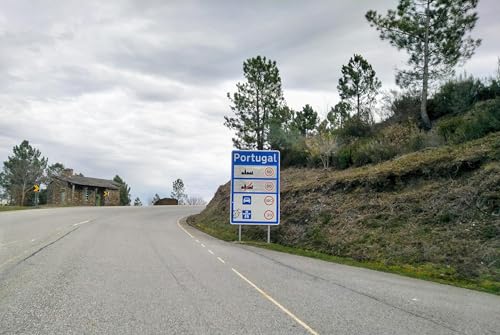
NOTE: If you are enjoying this series of memories and didn’t see it, I shared a letter with 49 (or more, if I’m honest) of my favourite scents. This has several little scenes in there, not dissimilar to Witness Notes, and you might enjoy reading or listening to that, too:(After you have read these introductory paragraphs once, you can skip to the new/old content below. If you are listening, then the time stamp is around the two minute 45 second mark.)IntroductionThe word settled, to me, carries connotations I am keen to avoid. I have never felt settled or, perhaps, I cannot recall a time I felt settled. I do not feel settled now, writing this, and I’ve lived in the same house for three and a half years. Without even discussing the obvious issues of colonisation, I just don’t feel like I could, or should, settle; better to keep my constituent parts shook up, agitated perhaps, rather than separating and stagnant.Instead, I feel as though I have been travelling for years, maybe because I have not lived in my ‘home’ nation of Scotland for eight and a half years, perhaps because I know I won’t stay here forever, or maybe because I carry that concept of home in a way which differs from many?More precisely, I still think of myself as a slow traveller, globally feral. Recently, I have been revisiting places through the photographs and words I recorded when my feet crossed their soil. This is a way of reminding myself of where I have been, not just in space and time, but in mind, too. It is a wonderful thing, to come out of a low and rediscover myself through words I crafted, through the lens of a camera, when memory has wandered in the fog for too long. Thank you, past me.When I first started sharing letters with the world in this fashion, six or more years ago, I usually began them with a vignette of where I was, a sort-of travel diary, mixed with nature observation, locking in the setting for the reader, before I spoke of other things—and, by so doing, ensuring that place fed into the whole. It was a useful device, for reader and myself both but, as these letters were sent to so few readers, and now languish archived behind a paywall, I thought it a shame not to share these snippets again.As such, I am going to share a short series of these sketches, accompanied by a photograph from that time, sent to you in date order.I shall include the above paragraphs in each of the letters in this series, but I shall also include a link at the very start, so you can skip ahead once you are familiar with the above words. If you are listening and similarly want to skip, then the timestamp you want to navigate to will be in the same place.Taken without these paragraphs, each is a short read, and I hope you enjoy them.Northern/Central Portugal. January, 2020.I have always covered distance, at least since I was eight and our first long drive up to Orkney from the flatlands of Lincolnshire, the only home I had known before this. Covering distance is not simply a matter of miles or kilometres, it is also time. Time and space combine in a journey, weave through one another until a whole is achieved, wrapped in an ongoing, continuous spiral of things seen. First this side, then the other, then above, below, in front, behind. The faster the speed, the more complex this weave becomes, the more gaps appear.On that first journey north, back in the mists of time, when the world was still young and I was too, I caught my first glimpse of an oystercatcher. It was dead, on a road in the far north close to where the MV St. Ola would carry us across the Pentland Firth, white and black feathers a monochrome backing for the blaze of sudden orange on its beak and legs. Since then, I have seen several other firsts in an equally macabre fashion. My first badger. Dead. My first polecat, dead.These thrills of recognition are always tempered by the simple fact of the death itself. I remember reading once that seeing dead badgers on a road is a good sign (or, at least, as good as any roadkill can be), as it suggests a healthy population with wide-ranging youngsters who do not yet know the dangers of a road. Personally, I’d prefer it without any cars or fast roads, a view which often raises eyebrows and incites laughter. Yet, look back just one hundred years, and our roads were still mostly unready and unpaved for the automobile. There may well come a time yet when this is once more the case.Many of the roads I have seen in the last few weeks seem to still be in a permanent state of unreadiness. Strips of land clinging to the side of a precipitous hill, or following a seemingly tortuous route through valley bottoms, mirroring the watercourse beside. These roads, these hints of roads, here in Portugal, were not made for cars, as they were not in many places across Europe. These roads are old. They remember the cart, the horse, the donkey, the tread of the sheep and their attendants, the vagabond, the roamer, the ...
adbl_web_anon_alc_button_suppression_t1
No reviews yet