Planet Money cover art

Planet Money

Planet Money

By: NPR
Listen for free

Wanna see a trick? Give us any topic and we can tie it back to the economy. At Planet Money, we explore the forces that shape our lives and bring you along for the ride. Don't just understand the economy – understand the world.

Wanna go deeper? Subscribe to Planet Money+ and get sponsor-free episodes of Planet Money, The Indicator, and Planet Money Summer School. Plus access to bonus content. It's a new way to support the show you love. Learn more at plus.npr.org/planetmoney
Copyright 2015-2021 NPR - For Personal Use Only
Economics Politics & Government
Episodes
  • The sneaky way companies get new chemicals into our food
    May 29 2026
    99% of chemicals in our food right now were added without FDA approval. Many were added in secret, through a sneaky loophole built into the 1958 Food Additives Amendment.

    It was supposed to require FDA approval for new additives. But food companies and chemical makers found a workaround. And the FDA formally okayed the loophole in the 90s — in the process bringing attention to a loophole to the loophole.

    The FDA has essentially admitted it doesn’t have the capacity to verify the safety of new food chemicals. So they leave it up to food companies and chemical makers to declare their brand new chemicals are safe. These chemicals are used in everything from chocolate and smoked fish, to tea bags, protein drinks, popcorn, and seeds.

    So, how’d the loophole get there, and what does it tell us about the priority the U.S. places on safety versus speed and innovation? And, how much can one lawyer do about it?

    Live show tour and book info. / Subscribe to Planet Money+

    Listen free: Apple Podcasts, Spotify, the NPR app or anywhere you get podcasts.

    Facebook / Instagram / TikTok / Our weekly Newsletter.

    This episode was hosted by Sarah Gonzalez, produced by Sam Yellowhorse Kesler, edited by Jess Jiang, fact checked by Sierra Juarez, and engineered by Robert Rodrguez with help from Kwesi Lee. Alex Goldmark is Planet Money’s executive producer.

    See pcm.adswizz.com for information about our collection and use of personal data for sponsorship and to manage your podcast sponsorship preferences.

    NPR Privacy Policy
    Show More Show Less
    36 mins
  • The leaked tapes that show how the rich avoid taxes
    May 27 2026
    Tax avoidance -- that is, legally reducing your tax bill -- is as American as apple pie. But the line between tax avoidance and tax evasion is often a grey one.

    On today’s show, a collaboration with Tax Notes, we listen in on the secret tapes that show how the wealthiest Americans avoid taxes.

    We trace the lifecycle of a tax loophole: how it was born (in Malta), how it grew, how the Feds cracked down, and how the industry came to its rescue -- with the help of one high-ranking Trump administration official.

    Support:

    • Planet Money+
    Read:

    • Our book: Planet Money: A Guide to the Economic Forces That Shape Your Life
    • Our weekly longform Planet Money newsletter
    • Our weekly Indicator round-up newsletter
    Follow:

    • Instagram
    • TikTok
    • YouTube
    • Facebook

    This episode was produced by Luis Gallo and Emma Peaslee and edited by Marianne McCune. It was fact-checked by Sierra Juarez and engineered by Cena Loffredo and Robert Rodriguez. Alex Goldmark is Planet Money’s executive producer.

    See pcm.adswizz.com for information about our collection and use of personal data for sponsorship and to manage your podcast sponsorship preferences.

    NPR Privacy Policy
    Show More Show Less
    26 mins
  • The giant factory town that might be a giant mistake
    May 22 2026
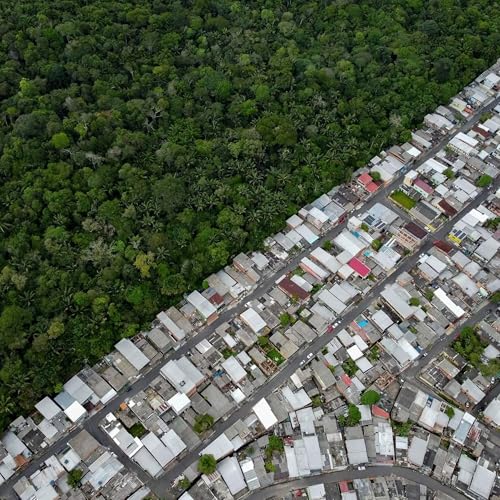
    How does a poor country become a rich country? There's a simple blueprint — or at least, that's what many economists used to believe. But over the years, a lot of rapidly developing economies have stalled out. These countries aren't poor anymore, but they're not rich either. They're stuck in the middle. The World Bank calls this problem the "middle income trap."

    And if there's a poster child for the middle income trap, many would point to Brazil. For a time, Brazil had one of the fastest growing economies in the world. On today's show, we head to Brazil to understand why the old blueprint for economic development might not work so well anymore.

    The story starts in the Amazon rainforest. With an audacious plan to industrialize the country as fast as possible.

    Support:
    • Planet Money+

    Read:
    • Our book: Planet Money: A Guide to the Economic Forces That Shape Your Life
    • Our weekly longform Planet Money newsletter
    • Our weekly Indicator round-up newsletter

    Follow:
    • Instagram
    • TikTok
    • YouTube
    • Facebook

    This episode of Planet Money was hosted by Jeff Guo. It was produced by James Sneed and Luis Gallo. It was edited by Marianne McCune, fact-checked by Sierra Juarez, translation help from Sarah Robbins. It was engineered by Robert Rodriguez and Jimmy Keeley. Alex Goldmark is our executive producer.

    A very, very special thanks to Carrie Kahn and Valdemar Geo from NPR’s Rio bureau. Also to Otaviano Canuto and Denis Minev.

    See pcm.adswizz.com for information about our collection and use of personal data for sponsorship and to manage your podcast sponsorship preferences.

    NPR Privacy Policy
    Show More Show Less
    27 mins
adbl_web_anon_alc_button_suppression_c
All stars
Most relevant
Love the show. it has got too political at some point, but it still has great episodes.

Facts, not only opinions.

Something went wrong. Please try again in a few minutes.