Episodes

  • A Tale of Two Blockades! What the Hell is Going On in the UK? (with Tom Merritt)
    Jun 26 2026

    What should have been a bipartisan housing bill touting affordability has instead become a fight over the Save America Act. Representative Anna Paulina Luna is leading a House conservative blockade, freezing routine procedural votes until the Senate takes up the Trump-backed elections bill. The problem is that the Senate has no path forward. The bill doesn’t have the votes, and the Senate isn’t about to let the House dictate its agenda. In the meantime, House Republicans are unable to move other priorities, including appropriations and next week’s defense policy bill.

    Luna’s leverage comes from one place: Donald Trump. The president canceled the planned signing of the bipartisan housing bill, saying he would not move forward until the Save America Act passes. House Republicans believe Luna’s close relationship with Trump is what’s keeping the blockade alive. Mike Lee has also pushed Trump to hold the line, arguing that Republican voters need something to get excited about before the midterms and that the Save America Act is that issue.

    Politics Politics Politics is a reader-supported publication. To receive new posts and support my work, consider becoming a free or paid subscriber.

    The divide inside the Republican Party is becoming clearer. Luna, Lee, and the hardliners argue that if voters gave Republicans the White House and both chambers of Congress, they expect them to fight for election legislation, not immediately explain why it can’t pass. The Senate’s answer is that the bill doesn’t have sixty votes. Their view is that Republicans can either spend weeks arguing over a bill that cannot pass or move on to things they can actually accomplish.

    I think this has been mishandled by both Speaker Johnson and Leader Thune. Whether or not the entire Save America Act could ever get sixty votes, there are pieces of it that are broadly popular with the American public, particularly voter ID provisions. Those could have been broken out and forced into separate fights. Instead, Republicans have backed themselves into a corner where the House is frozen, the Senate has no incentive to move, and everyone is arguing over tactics instead of making progress.

    My expectation is that Trump ultimately signs the housing bill. This feels like walking away from the table before signing in the hope of getting something else. He wants movement on the Save America Act. I just don’t think he’s going to get it.

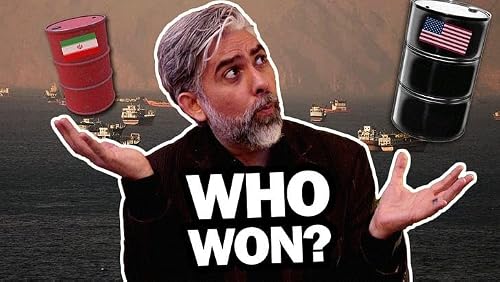
    Meanwhile, Iran's Revolutionary Guard reportedly struck the Singapore-flagged cargo ship Ever Lovely as it transited the Strait of Hormuz, raising new doubts about the U.S.-Iran memorandum of understanding and the security of commercial shipping through the waterway. No casualties were reported, but the ship was damaged and the International Maritime Organization paused evacuation efforts while reassessing security. My biggest question isn't whether the memorandum itself is good or bad. It's whether any agreement can actually be enforced if there isn't one clear center of leadership in Iran. I honestly don't know who's making the calls, and I’m not sure if anyone else really has a good idea either.

    Chapters

    00:00:00 - Intro

    00:02:57 - SAVE America Blockade

    00:11:54 - Iran

    00:14:16 - Asylum Ruling

    00:16:29 - James vs. Mamdani

    00:19:52 - Interview with Tom Merritt

    01:06:40 - Wrap-up


    This is a public episode. If you'd like to discuss this with other subscribers or get access to bonus episodes, visit www.politicspoliticspolitics.com/subscribe
    Show More Show Less
    1 hr and 11 mins
  • JEFFRIES vs. MAMDANI! NY-12 Heats Up the House! Digging Into the Anthropic Debacle (with Andrew Mayne)
    Jun 23 2026

    All eyes are on New York. The congressional primaries happen tonight, and in a city this Democratic, many of these races will effectively decide who heads to Congress. What I’m watching is a battle between Hakeem Jeffries and Zohran Mamdani. Mamdani is flexing. We’re going to see exactly how much of a kingmaker he is in New York City. Jeffries is backing incumbents like Dan Goldman and Adriano Espaillat, the chair of the Congressional Hispanic Caucus. Mamdani is backing candidates including Brad Lander and Darlisa Avila Chevalier. The big question is whether Mamdani’s endorsements can translate into wins, especially against somebody as entrenched as Espaillat.

    The race that really has my attention, though, is New York’s 12th Congressional District. Jerry Nadler is retiring, and what has followed is an absolute clown car of a race. Micah Lasher would be my favorite to win, but he’s the least interesting candidate in the field. George Conway, once one of the chief architects of turning the Monica Lewinsky scandal into the political force that it became and later one of the most notable Never Trump Republicans in America, is running as a Democrat. Jack Schlossberg, John F. Kennedy’s grandson, is also in the race. And then there’s Alex Bores, a New York Assembly member who has become the main character of this contest thanks to his relationship with AI.

    Politics Politics Politics is a reader-supported publication. To receive new posts and support my work, consider becoming a free or paid subscriber.

    The polling has been all over the place. Early on, Schlossberg led thanks to the Kennedy name. More recent polling has Lasher ahead, with Bores close behind and a huge chunk of the electorate still undecided. That’s important because Bores has become the center of one of the strangest political fights I’ve ever seen. Roughly $26 million has poured into this House race because of his support for the RAISE Act, a proposal to regulate artificial intelligence at the state level.

    The two major companies in artificial intelligence, OpenAI and Anthropic, have very different views on how to regulate AI. A super PAC supported by OpenAI leadership in a personal capacity spent money attacking Bores, arguing that splintered state regulations would hurt the industry. Anthropic-aligned groups responded by spending even more money. Do they support the RAISE Act? Who knows. They want OpenAI’s effort to fail, and that’s what makes fight this so unusual. All of this is far less about Alex Bores and more about two AI companies using a congressional primary as a venue for a much larger argument.

    I know politics, and I understand the influence of super PACs. I’ve never seen a personal beef quite like this one. Anthropic hates OpenAI, and it’s not a secret. Their CEO, Dario Amodei, does not believe OpenAI’s CEO Sam Altman is trustworthy. Anthropic’s view is that it needs to out-innovate OpenAI and become the market leader. At the same time, I think the anti-Bores effort made strategic mistakes. The ads were so ham-fisted that they gave him life he otherwise would not have had. The spending has even become controversial inside OpenAI. And tonight’s the night we find out whether any of it even mattered.

    Chapters

    00:00:00 - Intro

    00:05:34 - Jeffries vs. Mamdani

    00:10:04 - NY-12

    00:20:50 - Update

    00:22:00 - Keir Starmer

    00:26:50 - Israel

    00:31:35 - Congress

    00:34:29 - Intro to Attention Mechanism

    00:38:16 - Attention Mechanism with Andrew Mayne

    01:43:58 - Wrap-up


    This is a public episode. If you'd like to discuss this with other subscribers or get access to bonus episodes, visit www.politicspoliticspolitics.com/subscribe
    Show More Show Less
    1 hr and 48 mins
  • Can Republicans Hold the House? Checking In with Midterm Primaries (with Kirk Bado)
    Jun 18 2026

    Republicans are now arguing that their aggressive mid-decade redistricting campaign could preserve their House majority even in an environment where history is usually not on their side. According to a new memo from the National Republican Congressional Committee, newly redrawn maps have reduced the number of competitive districts and forced Democrats to compete in more Republican-leaning territory. Democrats dismiss that analysis, arguing that strong special election results and voter dissatisfaction with President Trump still favor a House takeover. My gut is still that Democrats will take the House. I do think it’s going to be closer than people think, if just because we’re in an intensely polarized country.

    Republicans are still looking for the why. That’s what they haven’t found yet. Why am I excited? Historically, at least in the Trump administration, it has been things like immigration. But you can’t run the next election on the thing you solved in the last election. I know there are a lot of frustrated conservatives who say we should be talking about the fact that we closed the border. What have you done for me lately? That is the refrain from voters. Republicans are going to gin up the culture war, and they’re going to point at Democrats and say they’ve learned none of their lessons. Turning the keys back over to them is not going to get you anything. It’s going to get you more impeachments, more nonsense, and less of what you want. Democrats, meanwhile, will say we have an out-of-control oligarch president and we need some kind of emergency brake, so give us back control of the House.

    Politics Politics Politics is a reader-supported publication. To receive new posts and support my work, consider becoming a free or paid subscriber.

    With gas prices continuing to fall, it’s not crazy to think Republicans could find some footing. The national average fell below four dollars, according to AAA. A month ago it was around $4.50. We are looking at a collapsing gas price. We have been told throughout the history of commodities that gas shoots up like a rocket and falls like a feather. We are seeing it fall pretty quickly. If the price of a barrel returns to the levels we saw before the war, now that the memorandum of understanding has been signed and there is free flow of oil through the Strait of Hormuz, you’re going to see lower gas prices. That’s usually what people rely on, and it’s also the hedge against inflation.

    Cheap gas had always been the Trump administration’s hedge against tariff inflation. The argument was that while you might pay more on imports, gas would remain extraordinarily low. Obviously that promise was broken with the Iran war. Now it seems that we are at least in some phase of calm and negotiation, a controversial one. My point of view on any American activity in the Middle East—some may even say adventure in the Middle East—is that it almost always ends with America having to tell Israel no. Israel is usually very excited about having us in the region because, in general, we agree with Israel on most everything that happens in the Middle East. But they will always want us to do more, and eventually we usually have to tell them we are not going to do everything they want. That is just the way I understand the region.

    Is this memorandum of understanding wise? I read the text that was released yesterday. It’s a pretty big give to allow Iran to sell oil. It’s going to help the gas price, but it is a pretty big give. The carrots we are offering are big and juicy, but they are not promised up front. Everything is contingent on what happens from here. For Republicans, the best-case scenario is relative economic calm and Donald Trump being seen as a game-changing president that people might not always agree with but who is moving things forward. If we’re talking about jobs numbers and things that are forward-facing, Republicans are probably winning the argument. If we’re talking about side issues and distractions, Democrats are winning the argument. I still think it’s going to be very, very, very hard for Republicans to keep the House. But again, this is a very polarized country, and the biggest thing Republicans need is a reason to get their people excited.

    Chapters

    00:00:00 - Intro

    00:01:57 - Republicans and the House

    00:12:19 - Obama

    00:15:51 - Thomas Kean Jr.

    00:19:36 - Iran

    00:24:43 - Kirk Bado on Primaries

    01:11:10 - Wrap-up


    This is a public episode. If you'd like to discuss this with other subscribers or get access to bonus episodes, visit www.politicspoliticspolitics.com/subscribe
    Show More Show Less
    1 hr and 17 mins
  • A Memorandum of Misunderstanding? Anthropic vs. the US Government, Round Two (with Maria Curi)
    Jun 16 2026

    The memorandum of understanding between the United States and Iran was apparently signed over the weekend, but the text remains a mystery to most. Donald Trump says he’ll release it and even read it himself so nobody can misunderstand it. If it’s such good news, though, why not put it out right now? Israel isn’t a fan of it, nor are those who believe we’ve abandoned the Iranian people by making a deal with the IRGC. At the same time, there may be a silent majority that cares less about the politics and more about the price at the pump. And that’s what caught my attention.

    Since the beginning of May, with Iran closing the Strait of Hormuz, gas prices in the United States have fallen. Not by a little, but by a lot. The national average has gone from roughly $4.50 a gallon to $3.50. That happened while the strait was closed and before any memorandum of understanding was announced. The White House wasn’t bragging about it. They weren’t loudly telling Iran that the closure wasn’t working. That made me think something else was going on.

    Politics Politics Politics is a reader-supported publication. To receive new posts and support my work, consider becoming a free or paid subscriber.

    After digging through it, I’ve been able to dig up a few explanations. The most public, I’d argue, was the Strategic Petroleum Reserve. The Department of Energy released more than 53 million barrels as part of a broader international effort, bringing the reserve down to its lowest level since 1983. There were also reports that the United States was helping move oil out of the Gulf using some of the same techniques Iran has historically used to evade sanctions. American production remained high. Every hint of a peace deal pushed oil prices lower. Global demand softened. China sharply reduced its purchases on the open market. Alternative routes around Hormuz became more important. Gasoline inventories improved. All of it pushed prices down.

    If I rank the reasons, peace-talk optimism sits at the top. Strategic reserve releases bought time. American-supported workarounds moved real barrels. Demand destruction, especially with China stepping back, reduced pressure. Improved gasoline inventories helped. Some of the more speculative theories include sanctions waivers for Iranian oil, greater tolerance for shadow-fleet shipments, and alternate export routes making Hormuz less decisive than Iran hoped.

    What stands out is that there were more American incentives to get to the table than Iranian ones. The Strategic Petroleum Reserve is a temporary band-aid. Smuggling oil out of the Gulf is risky. Every day the Strait of Hormuz remained closed carried economic and military risks. That helps explain why the White House wanted a deal. Iran had incentives too, especially if China was no longer buying at previous levels, but the balance of pressure appears different than many expected.

    My assumption remains what it has been for weeks: there are multiple power centers inside Iran, and the biggest question is whether any deal can survive them. The Ayatollah is gone, much of Iran’s leadership structure has been shattered, and the IRGC itself appears divided between factions willing to make a deal and hardliners who want to keep fighting. The memorandum of understanding may give us a clearer picture when we finally see it. Until then, the biggest question isn’t whether a deal exists. It’s whether anyone on the Iranian side can actually enforce it.

    Chapters

    00:00:00 - Intro

    00:02:38 - Iran and Gas Prices

    00:31:47 - Update

    00:32:04 - UFC 250 Terrorism Plot

    00:37:46 - Russia-Ukraine

    00:39:48 - Primaries

    00:42:48 - Interview with Maria Curi

    01:11:46 - Wrap-up


    This is a public episode. If you'd like to discuss this with other subscribers or get access to bonus episodes, visit www.politicspoliticspolitics.com/subscribe
    Show More Show Less
    1 hr and 16 mins
  • Is Our Iran Deal Groundhog Day Almost Over? Platner, LA's Mayor, and More (with Karol Markowicz)
    Jun 11 2026

    The situation with Iran continues to feel like Groundhog Day, except this time, believe it or not, there may actually be movement.

    Earlier this week, I mentioned that I had heard from people in the know that the United States military was coiled to strike Iran and was looking for either provocation or justification to resume major military activity. That appeared to happen when Iran shot down an Apache helicopter that was escorting oil tankers through the Strait of Hormuz. We also learned that more than 100 million barrels of oil had moved through the strait under U.S. protection over the last month.

    Politics Politics Politics is a reader-supported publication. To receive new posts and support my work, consider becoming a free or paid subscriber.

    One of the reasons that caught my attention is that gas prices in the United States have been falling pretty dramatically. It was a head-scratcher. If the Strait of Hormuz was effectively stalled, then what explained the drop? Was it a global rerouting of supply? Was there a China component that had been negotiated and never publicly heralded? I didn’t know then, and I don’t know now, but the announcement about oil shipments at least provides part of the picture.

    What’s more interesting is what happened next. After one night of military strikes, the second night was canceled. Donald Trump said that’s because we’re at the point of a deal, one that has supposedly been signed off on by all available parties in the region. It appears to resemble the memorandum of understanding that’s been floating around for weeks, although nobody really knows because we still haven’t seen the text. We don’t know if it’s real. We don’t even know exactly what it says.

    The administration’s definition of success has been fairly consistent: Iran gives up its nuclear material and removes the nuclear threat. If that’s actually in the agreement, then it would be meaningfully different from what came before. The obvious question is what Iran gets in return. The reporting and public comments suggest that Tehran is focused on access to frozen assets and getting money quickly. Whether that money goes directly to Iran, whether it’s routed through humanitarian aid, and what conditions are attached are all questions that still need answers.

    The strongest sign that something may actually be happening is coming from inside Iran. Reports indicate that FARS, the IRGC-controlled news agency, is acknowledging that a draft memorandum of understanding exists, that the United States has approved it, and that Iran is likely to do the same. The bigger question is whether any agreement can actually be enforced. Iran’s leadership appears splintered. We’ve seen officials make commitments before, only to have military figures or IRGC commanders move in a different direction. That’s why the real issue isn’t whether a deal can be signed. It’s whether anybody in Iran has enough authority to keep it.

    Chapters

    00:00:00 - Intro

    00:02:48 - Iran

    00:08:38 - Interview with Karol Markowicz

    00:36:19 - Update

    00:37:19 - DeSantis and AI

    00:42:56 - FISA

    00:44:42 - Director of National Intelligence

    00:47:17 - Interview with Karol Markowicz, con’t

    01:07:27 - Wrap-up


    This is a public episode. If you'd like to discuss this with other subscribers or get access to bonus episodes, visit www.politicspoliticspolitics.com/subscribe
    Show More Show Less
    1 hr and 11 mins
  • It's Time to Fix How California Counts Votes. Does Platner Still Have a Shot? (with Bill Scher)
    Jun 9 2026

    California is inviting questions about its elections because of a problem that is entirely solvable: the state takes too long to count ballots. This LA mayoral race is just the latest example.

    Let’s look at what happened. On election night, Karen Bass was at 30 percent of the vote. Spencer Pratt was at 28 percent. Nithya Raman was around 20 percent. Every model from respected vote-modeling people that I saw indicated that Raman would gain more than Pratt in the later votes, presumably giving her enough to catch up to a less-distant third place without surpassing Pratt’s campaign. Instead, we got an avalanche of late Raman support.

    Politics Politics Politics is a reader-supported publication. To receive new posts and support my work, consider becoming a free or paid subscriber.

    The first vote drop had Raman running about 10 percent ahead of Pratt. The second was stronger. Then Friday came around, and things got really weird. Whether you want to ascribe malicious motives to it or whether it’s totally above board and legitimate, the fact that this is happening on Friday for an election that happened on Tuesday becomes suspicious when Raman gets 40 percent of the vote total in a drop. She’s not only running ahead of Pratt, she’s running ahead of Bass. The same thing happened Saturday. The same thing happened Sunday. Now Raman is through to face Bass in the general a week after this sort of outcome — even in LA — seemed unlikely.

    Am I saying that somebody cured ballots after seeing the results? Am I saying somebody harvested ballots? No. I don’t know specifics, and nobody else does, quite frankly. I’m saying you don’t have to do this. Opening the process up this way is the reason you create suspicion. Is it odd? Yeah, it is odd. Even the people who thought Raman was going to overtake Pratt thought it would happen by the skin of her teeth at the very end. Nobody thought it was going to be over by the weekend. It’s beyond expectations.

    I’m going to renew my call here, and it’s not just me saying it. You’ve got systems in America that process a lot of votes really fast, and the way they do it is not rocket science. Florida created a system after 2000 that handles a lot of early voting and a lot of vote-by-mail, but those ballots are processed before Election Day and then dumped into the results when the polls close.

    If we’re in an era of declining trust in elections, then I don’t care how you think we got here. I don’t care if you think it was Chicago in 1960, hanging chads in 2000, Democrats in 2020, Elon Musk and Starlink in 2024, or any of the other election fraud theories that have floated around American politics. What I care about is creating a system that we can all look at and say, “Seems like what happened.” I don’t think California is close to having that, and it’s only going to get worse if we don’t make some big changes ahead of 2028.

    Chapters

    00:00:00 - Intro

    00:03:22 - California Results

    00:13:57 - Interview with Bill Scher

    00:35:08 - FISA

    00:38:06 - Walz and Ellison

    00:41:19 - Dems’ New Super PAC

    00:44:09 - Interview with Bill Scher, con’t

    01:13:13 - Wrap-up


    This is a public episode. If you'd like to discuss this with other subscribers or get access to bonus episodes, visit www.politicspoliticspolitics.com/subscribe
    Show More Show Less
    1 hr and 17 mins
  • The Graham Platner Situation Gets WORSE! Texas Senate Races and DC Bar Drama (with Reese Gorman)
    Jun 4 2026

    A new Graham Platner story dropped today, and it answers one question while opening about a dozen others. The reporting centers on an ex-girlfriend from his time in Washington who describes behavior that she says included being yanked out of cabs, shaken by the shoulders, blocked from leaving rooms, and subjected to bizarre conversations about violence and power. The Platner campaign does not appear to dispute many of the specifics. Instead, it continues to insist that none of this amounts to sexual assault. Their strategy is obvious: keep this campaign alive until July 10, the last day under Maine law that Democrats could replace him on the ballot.

    The problem is that the list of people the campaign says are actually the problem keeps getting longer. First it was the former campaign manager. Now it’s an ex-girlfriend. The campaign has gone out of its way to point out that the woman worked in Republican politics years ago. Maybe that’s relevant, maybe it isn’t. What matters politically is that this is now the second woman in a week whose allegations are being dismissed while the campaign asks everyone to focus on Graham Platner instead. Meanwhile, the campaign’s own internal polling reportedly has him four points ahead of Susan Collins. That’s not exactly reassuring when a public poll from late May had him up nine. If you’re releasing a poll to save a candidacy and it shows you’ve lost five points, that’s not great.

    Politics Politics Politics is a reader-supported publication. To receive new posts and support my work, consider becoming a free or paid subscriber.

    The bigger issue remains the stuff we still don’t know. The dating stories are damaging, but the Kik story is the Pandora’s box. That’s the ugly stuff. What’s behind that door? The potential answer is why this scandal continues to dominate the conversation. Platner’s goal now is simple: survive the primary, survive the next month, and make it to July 10. If he’s still standing then, Democrats may have no choice but to circle the wagons.

    Elsewhere, there was a polling shocker in Ohio. A Fox News poll found Sherrod Brown leading Senator John Husted by eight points, 53 to 45. If we start seeing more polls like that, Democrats may have found one of their best pickup opportunities. Brown is a known quantity in Ohio. If the environment continues to improve for Democrats, it may not matter how exciting or energetic his campaign is. He could simply coast on familiarity and favorable conditions.

    California, meanwhile, continues to count ballots at a pace that seems designed to test the limits of human patience. The governor’s race is still unresolved, and Los Angeles mayoral results remain in flux. What frustrates me is that this is a choice. California mails ballots to everyone and allows ballots to arrive days after the election. Fine. But there’s no reason the ballots already in hand couldn’t be processed faster. Instead, the state releases vote drops so slowly that candidates can spend weeks appearing to lead or trail before the public gets anything close to a final picture. I genuinely think that’s bad for democracy because people are not wired to watch somebody lead by eight points and then potentially lose weeks later.

    That brings us to Spencer Pratt and Nithya Raman. Prediction markets currently have Raman favored to make the general election despite Pratt holding second place. I don’t understand the math. Raman gained ground in the latest vote drop, but not nearly at the pace she would need to overtake him. Maybe future batches change that. Maybe they don’t. But when prediction markets start pricing in outcomes that don’t seem to match the publicly available numbers, people begin assuming something else is going on. That’s another reason the endless California count is so damaging. Even if everything is perfectly legitimate, the process encourages suspicion in ways that simply don’t seem necessary.

    Chapters

    00:00:00 - Intro

    00:01:20 - Graham Platner

    00:09:22 - Ohio and California

    00:14:58 - Interview with Reese Gorman

    00:30:18 - John Bolton

    00:32:01 - Todd Blanche

    00:34:26 - College Sports Bill

    00:41:28 - Interview with Reese Gorman, con’t

    01:01:43 - Wrap-up


    This is a public episode. If you'd like to discuss this with other subscribers or get access to bonus episodes, visit www.politicspoliticspolitics.com/subscribe
    Show More Show Less
    1 hr and 6 mins
  • Is Platner Done? All the Antics of Canadian Parliament (with Evan Scrimshaw and Charlie Feldman)
    Jun 2 2026

    The Trump administration is backing away from a planned $1.8 billion anti-weaponization fund after a revolt from Republicans on Capitol Hill. The fund, tied to a settlement and intended to be administered by the Justice Department, had drawn criticism as a potential slush fund that could benefit Trump allies prosecuted under the Biden administration. White House officials told GOP leaders they were retreating from the proposal, at least for now.

    What stands out to me is that this was never something Trump could simply do by executive order. It would have had to move through Congress, and right now he is running short on political leverage. Collins, Murkowski, and McConnell have already shown they’re willing to break with the administration. Add in senators like Tom Tillis, John Cornyn, and Bill Cassidy, who have their own political considerations, and suddenly there are a lot of Republican votes that need convincing. If every other priority is tied to this fund, it becomes a problem. The White House has signaled retreat…. for now.

    Politics Politics Politics is a reader-supported publication. To receive new posts and support my work, consider becoming a free or paid subscriber.

    Meanwhile, Florida Attorney General James Uthmeier has sued OpenAI and CEO Sam Altman, alleging that ChatGPT is an unsafe product, particularly for children, and that the company misled the public about its risks. The lawsuit argues that AI contributes to harms including addiction, suicide, and even mass shootings. What makes this interesting is that there are no clean ideological fault lines on AI. In Florida, AI is increasingly being treated as just another version of Big Tech, grouped together with the companies conservatives believe have censored or de-platformed them. Simultaneously, politicians in states like Michigan are celebrating AI investments, data centers, and the jobs that come with them, even as it might leave Gretchen Whitmer on the outside looking in for 2028. As AI becomes a larger part of the economy, states are going to play a much bigger role in determining how it develops.

    But our biggest story remains Iran. Over the last few days, a targeted IRGC commander killing, an attack on a U.S. airbase in Kuwait, and reports that Iran is ending ceasefire talks have all pushed events away from diplomacy and toward escalation. Iran is threatening to fully shut down the Strait of Hormuz and other export routes. The president of Iran has reportedly tendered his resignation, while the IRGC appears to be tightening its grip on power. At the same time, Hezbollah has reportedly signaled a willingness to accept a ceasefire with Israel, though neither American nor Israeli officials seem convinced it would hold.

    Everything now revolves around leverage. The Strait of Hormuz is Iran’s last major bargaining chip. If it reopens without major concessions, Tehran loses a significant source of pressure. If Iran gives up its nuclear ambitions or loses the ability to project power through regional proxies, the regime risks undermining the very justification it has used for decades. Meanwhile, global oil markets are hanging on every development. Hopes of a diplomatic breakthrough have helped keep prices contained, but each new escalation raises the possibility that the conflict widens and energy markets absorb the shock.

    One small but important development is that internet access appears to be returning inside Iran after months of restrictions. That means more information is beginning to flow out of the country at a moment when the political situation appears increasingly unstable. Whether this ends in negotiations, further military action, or a deeper internal power struggle unfortunately remains wrapped in the fog of war.

    Chapters

    00:00:00 - Intro

    00:03:07 - Interview with Evan Scrimshaw

    00:39:19 - Trump Slush Fund

    00:42:13 - AI Lawsuit

    00:46:34 - Iran

    00:50:10 - Interview with Charlie Feldman

    01:30:42 - Wrap-up


    This is a public episode. If you'd like to discuss this with other subscribers or get access to bonus episodes, visit www.politicspoliticspolitics.com/subscribe
    Show More Show Less
    1 hr and 35 mins