• The Voicemail
    Jun 1 2026

    Nolan James Webb was found in the crosswalk at Burnside and Twentieth at 11:42 PM on a Sunday in November. Hit-and-run. The driver never stopped.

    Audrey's last text to him: "Bring back chips if you remember."

    He didn't bring back chips.

    She's been paying forty-seven dollars a month for three years to keep his phone number active. Not to call him. To hear his voicemail. Two seconds of his voice: "You've reached the voicemail box of Nolan James Webb." Every night, in the dark, phone on the pillow where his head used to be. Her therapist calls it a transitional object. Her sister Diane calls it unhealthy.

    On a Thursday in November, the phone rings instead of going to voicemail. And Nolan answers.

    Groggy. Confused. Like he's waking from deep sleep. He doesn't know where he is. He doesn't know he's dead. His actual phone is in a plastic bag on a shelf in Audrey's closet, battery dead for three years. She's calling his number, not his phone. Something else picked up.

    They fall back into the old pattern. They'd dated long-distance for two years, Portland and Seattle, seven hundred and thirty nights of phone calls before he moved in. Their whole relationship was built on disembodied voice.

    Forty nights. His voice fading a little more each call, like a radio station losing signal. By night twelve, he notices something is wrong. He can't remember anything except the dark and waiting for her to call. No days. No life outside the conversations.

    He asks her on night thirty-two. "What happened to me?"

    She doesn't tell him. She can't. If he knows, the connection might break.

    But he's fading. And so is she. Eight pounds lost. Dark circles. Curtains drawn. Phone on the pillow. Diane finds her in bed at two in the afternoon with nothing in the fridge.

    One of them has to say it. One of them has to hang up.

    Show More Show Less
    33 mins
  • The Seat
    May 28 2026

    Row G, seat 14. Every Tuesday at seven-thirty for eleven years. She sat in 14, Dana sat in 15. The Rialto Theater on Fourth Street, ninety-six seats, single screen. They never missed a week.

    Dana has been dead for two years. She still goes every Tuesday. Still sits in 14. Leaves 15 empty.

    One November Tuesday, a woman is sitting in her seat.

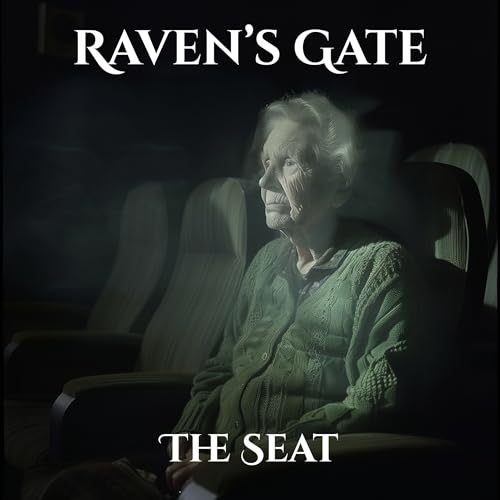
    Small. White-haired. Green cardigan buttoned to the neck. Reading glasses pushed up on her forehead. Eating peanut M&Ms from a box in packaging that was discontinued in the 1990s. She refuses to move.

    Her name is Bette Olsen, from Duluth, Minnesota. She was married twice. First to Walter, thirty-two years, the love of her life. Then to Phil, three years, a mistake. Walter died of a heart attack in 1983. In seat 14 of the Rialto. He and Bette had attended every Tuesday for twenty-six years.

    Bette died of a stroke in her kitchen in 1997. She's been coming back to the Rialto every Tuesday since. Sixteen years alone before the narrator started coming. Thirteen more years of watching from the dark.

    She took the seat on purpose. "I took your seat so you'd have to sit somewhere new. So the pattern would break."

    They watch movies together through the winter and into spring. Bette shares her M&Ms. The narrator shares her grief. And Bette grows fainter week by week, the projector light passing through her shoulder, Walter pulling like a tide from wherever he's been waiting since 1983.

    The last Tuesday is in June. When the credits roll, seat 14 is empty. A box of peanut M&Ms sits on the armrest with one left inside.

    The narrator sits in seat 14 now. She eats peanut M&Ms at every movie. And when a young woman with red eyes sits down alone in seat 16, she offers her the box.

    Show More Show Less
    29 mins
  • The Recipe Box
    May 26 2026

    Helen died in her sleep in February. Frank ate frozen dinners for four months. Lost twenty pounds. Their daughter Beth left groceries on the counter and tried not to say anything, and then said everything, and none of it mattered because Frank couldn't boil water and didn't care to learn.

    In June, looking for a Phillips head screwdriver to fix a loose cabinet hinge, he found the recipe box in the junk drawer.

    Wooden. Craft-fair quality. Eight inches by five by two, with a brass clasp. Inside: dozens of index cards organized with tab dividers cut from cereal box cardboard, labeled in Helen's blue ink. Pot roast, chicken parm, beef stew, meatloaf, Sunday sauce, shrimp scampi, chicken soup.

    Every card had notes in the margins. Not general cooking tips. Instructions written directly to Frank, anticipating his specific mistakes.

    The first attempt was pot roast. He burned it. Set off the smoke detector. The second was chicken soup. Barely edible, but he ate it at the table for the first time since February.

    The third was beef stew on a rainy day, and the kitchen got warm in a way that had nothing to do with the stove. The fluorescent light stopped buzzing. A trace of vanilla and floral perfume drifted through the room. The stew came out perfect despite everything he did wrong.

    It happened every time after that. The oven that runs twenty degrees hot corrected itself. Under-salted food arrived seasoned. A wooden spoon migrated back to its old position in the drawer. And a tuneless humming filled the kitchen from everywhere at once.

    Helen is teaching Frank to feed himself from the other side of wherever she is.

    The last card is in an envelope at the bottom of the box. Scrambled eggs. The simplest recipe. The note underneath says: "You can do this one yourself, Frank. I know you can. I love you. Now eat a real breakfast."

    Show More Show Less
    27 mins
  • The Photographer
    May 22 2026

    Nora Voss photographs the bereaved. Eleven years of sitting in living rooms with widows and orphans and parents who've buried children, making portraits of people in the worst season of their lives. Most photographers won't touch the work. Nora can't stop.

    Because roughly one session in twenty, her camera captures something that wasn't in the room.

    A hand on a shoulder when the subject was alone. A shadow with no source. Fingers laced through a widow's hands. Forty-three files in a folder on her desktop labeled "errors." She has never told anyone.

    Graham Tierney calls on a Wednesday in November. His wife Claire died three weeks ago. He wants a portrait in their home, a Victorian on Birch Lane where Claire played Chopin on a piano by the fireplace every evening for thirty-two years while Graham read in the wingback chair beside her.

    Session one: forty-eight frames. Claire appears in five of them. Standing behind the piano, sharp and clear, hands on the lid, mouth open as if trying to speak.

    Session two: sixty frames. Claire appears in thirty-one. She's closer. Both hands on Graham's shoulders. Her expression is desperate.

    Session three: eighty-four frames. Claire appears in seventy-one. She is draped over the chair, arms around him, cheek against his head. Nora reads her lips across thirty consecutive frames.

    "Help him stop."

    Graham has been taking sleeping pills. The doctor prescribed them after the funeral. Two bottles of thirty. Seven pills remain. Fifty-three pills in thirty-five days. He's been trying to get close enough to the edge to reach Claire on the other side.

    Claire isn't trying to pull him through. She's trying to keep him here.

    Nora has the photographs. She has the pill count. And she has maybe three or four nights before the thing Claire is screaming about becomes the thing no one can fix.

    Show More Show Less
    35 mins
  • The Matchmaker
    May 20 2026

    Barry died of a brain aneurysm in the garage on a Tuesday afternoon in October. He'd just finished a sixty-two-mile cycling ride, pulled in, and collapsed reaching up to hang his bike on the wall mount. Sara found him four hours later, still in his cycling shoes.

    She sealed the garage. Parked in the driveway for two years. Through snow, through ice, scraping her windshield at six in the morning rather than open that door.

    Twenty-three years of marriage. She wasn't ready to open anything.

    Then the sprinklers went off.

    A construction site, no rain in weeks, no malfunction on record. The system soaked Sara and a steel fabricator named David Sterling, a blunt widower from Pittsburgh whose wife Jennifer had died in a car accident eight years prior. They ducked into a coffee shop and talked for three hours.

    Two weeks later, an elevator trapped them together for forty-five minutes. Software glitch. No explanation. David asked Sara to dinner. She said no.

    That night, the radio in her hallway clicked on by itself and played Sam Cooke's "You Send Me." Their wedding first-dance song.

    Barry is matchmaking from the other side. And he is terrible at it.

    A food poisoning incident that hit only David. A car that wouldn't start. A hotel double-booking. A dream where Barry appeared, fading at the edges, and told her: "You're not dying, Sara. But you're not living either. Open the door."

    The garage door.

    David, three bourbons deep in a bar, told her the truth nobody else would. "You park in the snow, Sara. You scrape ice off your windshield at six in the morning rather than open a garage door."

    Sara opened the garage for the first time in two years. She told Barry about David. She felt arms she couldn't see and heard two words in her chest: "Go. Live."

    Show More Show Less
    31 mins
  • The Letters
    May 18 2026

    Tom Whitfield walks thirty-seven steps to his mailbox every day at four o'clock. The mail comes at two-thirty. He doesn't know why he waits. Routine is the scaffolding grief leaves behind when it takes everything else.

    Grace died in March. Pancreatic cancer. A cough in September, a diagnosis, and six months later Tom was standing in a parking lot after the funeral telling his brother Dan exactly where he could put his "better place."

    They'd been married thirty years. They'd planned to go to Europe for as long as he could remember. Six weeks, starting in Lisbon, working north. Maps spread across the kitchen table on Sunday evenings with a bottle of wine. They never went. Kids. Mortgage. Economy. Timing. Always next year.

    Six months after the funeral, a letter arrived. Grace's handwriting. Postmarked from Lisbon.

    She described the sardine restaurants by the water. The light on the tile. The hills. She wrote the way she talked, warm and specific and organized, and she signed it the way she always signed everything between them.

    A second letter came from Barcelona. A third from Rome. Then Athens, Paris, Vienna, Dublin, Prague, Edinburgh. Eleven letters from eleven cities. The European trip they never took, written in the hand of a woman six months in the ground.

    Each letter gave Tom an instruction. Clean out my closet. Call your brother. Attend a symphony. Plant something. Laugh again.

    The Barcelona letter referenced Tom fixing the kitchen faucet three days before it arrived. Grace wrote these letters in October, from a hospital bed. She couldn't have known.

    The final letter came from Edinburgh. The handwriting was lighter. Thinner. She told him to open a sealed envelope she'd left at the oncologist's office. Inside was the truth about how, and a question she couldn't answer herself.

    Tom booked a flight to Lisbon on the anniversary of her diagnosis. He packed the blue dress from their daughter's wedding in his suitcase.

    Show More Show Less
    29 mins
  • The Garden
    May 14 2026

    Ruth Adler's will left her granddaughter three things: a white clapboard house in Millbrook, eleven thousand dollars, and a garden that wraps three sides of the property. The handwritten note attached to the deed said: "The garden is not optional. It is the house." And below that: "Nora will kill everything at first. That's fine. Tell her to keep going."

    Ruth was right. The poppies died by May. The lavender faded by June. The roses dropped their blooms in a single week. By August, more than half the garden was dead. Beth Nowak from the nursery on Route 9 tested the soil, checked the drainage, and found nothing wrong.

    In September, Nora found the journal. A composition notebook in the bedroom closet, first entry dated 1965. Every plant in the garden was planted for a specific memory of Thomas Adler. Red poppies for the day Ruth met him at a bus stop, corner of Maple and Third. Lavender for his mother's kitchen in Vermont. The dogwood for his proposal on Prospect Hill. Roses for the forty-three letters he wrote from overseas.

    Thomas died in Vietnam in 1967. He was twenty-three. They were married eleven months.

    Ruth tended his memory in that garden for sixty years.

    When Nora replanted following the journal, something changed. She dug deeper, added bone meal, and did the one thing the gardening books never mentioned. She talked to each plant. Told it the story of why it was there. A green shoot appeared the next morning. In November. In frozen ground.

    The smell of dried lavender arrived with it. And a warmth on her shoulders, like familiar hands, and a voice she heard not in her ears but in the hollow space below her ribs.

    Ruth has one more thing to teach her granddaughter. Not how to keep a garden alive. How to plant a life worth tending.

    Show More Show Less
    32 mins
  • The Frequency
    May 12 2026

    Walt Pfeiffer is seventy-nine years old, a retired antenna design engineer with thirty-two years at Raytheon and a ham radio habit that started when he was fourteen. Call sign W1AEP. His wife June died three years ago. Pancreatic cancer. Diagnosed in April, gone by August, after forty-six years of marriage.

    The radio shack sat dark for two years. He couldn't walk into the room she'd let him take over in 1994 without hearing her absence in the silence between frequencies.

    One sleepless October night, he went back in. Turned on the Kenwood. Scanned the bands. And on 14.227 megahertz, he picked up a signal that shouldn't exist. Impossibly clean. No static. A woman's voice, warm and immediate, unlike anything that propagates on twenty meters at night.

    Her name is Delia Marsh. Edgewood, Cranston, Rhode Island. Call sign WA1FXL. She built a Heathkit DX-60 transmitter from a kit to prove a man at a ham fest wrong when he said women lacked the patience for it. She is fifty-two years old.

    She is also speaking from October 1983.

    They talked every night for weeks. Two lonely people on opposite sides of a forty-two-year gap, falling into the kind of intimacy that only exists at two in the morning when no one else is listening. Walt fell in love with her voice before he understood what was happening.

    Then he went to the library. Found the microfilm. Cranston Herald, page four, six column inches. "LOCAL WOMAN DIES IN HOUSE FIRE." March 1984. Faulty electrical wiring. No survivors.

    Walt has five months. He knows how she dies. He knows what's wrong with her house. And he's terrified that telling her will break the only connection he has left.

    Show More Show Less
    39 mins