Episodes

  • ‘The undruggable became druggable’: a gamechanging treatment for the world’s deadliest cancer
    Jun 11 2026
    A daily pill can double survival time in patients with the world’s deadliest cancer, according to the results of a clinical trial that experts are saying is a gamechanger and one of the biggest breakthroughs in decades. To find out more about how daraxonrasib works and how life-changing it could be for patients, Madeleine Finlay speaks to Prof Naureen Starling, consultant medical oncologist at the Royal Marsden hospital. Help support our independent journalism at theguardian.com/sciencepod
    Show More Show Less
    15 mins
  • The dinosaurs who survived the asteroid
    Jun 9 2026
    While many dinosaurs were wiped out when a colossal asteroid struck Earth 66m years ago, one group survived: birds. Prof Steve Brusatte, a palaeontologist at the University of Edinburgh, has written a new book, The Story of Birds, tracing the evolution of our feathered friends from their dinosaur origins. He joins science correspondent Nicola Davis to discuss how scales first became feathers, how winged dinosaurs survived the impact of the asteroid and why their extreme adaptability offers hope that birds might also make it through the current environmental crisis. Help support our independent journalism at theguardian.com/sciencepod
    Show More Show Less
    17 mins
  • Heatstroke, sports washing and VAR psychology: the science of the World Cup
    Jun 4 2026
    It’s just a week until the first whistle of the 2026 World Cup. To mark the occasion, Madeleine Finlay talks to Ian Sample about the science behind the tournament. It’s likely to be one of the hottest ever World Cups, and scientists have written to Fifa asking it to reconsider its heat mitigations for players and referees. Dr Oliver Gibson of Brunel University outlines their concerns. Also on the agenda is the huge fossil-fuel impact of the tournament, and the effect of VAR on the psychology of referees and fans. Help support our independent journalism at theguardian.com/sciencepod
    Show More Show Less
    21 mins
  • The incredible science of the sleeping brain
    Jun 2 2026
    Humans have been wondering why we sleep for thousands of years. Is sleep’s purpose rest and relaxation, memory consolidation or maybe cognitive processing? In the last 15 years, scientists have discovered another possible explanation – waste disposal. In 2012 neuroscientist Maiken Nedergaard’s lab discovered that the brain has its own cleaning process, the glymphatic system, which clears away unhelpful proteins and metabolic byproducts, and only switches on at night. Since that groundbreaking discovery we’ve learned more about what drives this system and, importantly, how it could be impacting dementia. To understand more, Ian Sample talks to Prof Nedergaard about how she made the original discovery and how subsequent work is building a picture of sleep as anything but a quiet and inactive state. Help support our independent journalism at theguardian.com/sciencepod
    Show More Show Less
    15 mins
  • Are robots nearing their ChatGPT moment?
    May 28 2026
    Last month at Beijing’s half marathon, a robot named Lightning beat the human world record by nearly seven minutes. It’s the latest in a string of AI-powered milestones that have got people wondering whether robots are about to enter our everyday lives, just as chatbots have. And the country leading the charge is China, where the government has pledged to invest more than £100bn in robotics over the next 20 years. To find out how robots are already entering the workforce, and what needs to happen to get them cleaning our homes and weeding our gardens, Ian Sample hears from the Guardian’s senior China correspondent, Amy Hawkins, and from Nathan Lepora, professor of robotics and AI at Bristol University, who researches how robots can achieve human-like dexterity. Help support our independent journalism at theguardian.com/sciencepod
    Show More Show Less
    17 mins
  • Red-light masks: can they really slow ageing?
    May 26 2026
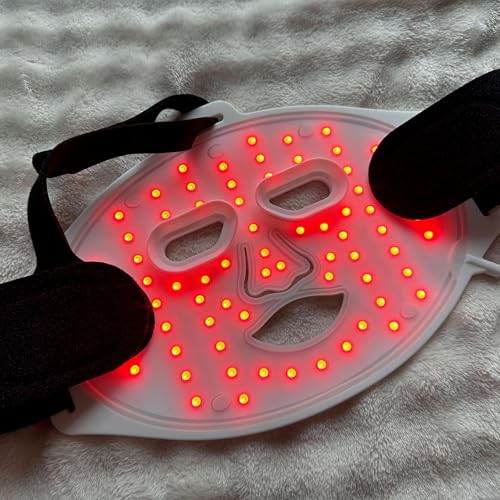
    Home red-light therapy devices have exploded in popularity as masks, body wraps and mittens promise to reduce wrinkles, redness and even acne. But do the claims stack up, and what other benefits are scientists investigating? Ian Sample hears from his co-host, Madeleine Finlay, and the consultant dermatologist Dr Jonathan Kentley. Kentley explains how the potential benefits of red light were discovered, how it is thought to interact with collagen in our skin, and what science has to say about its impact on our appearance. Help support our independent journalism at theguardian.com/sciencepod
    Show More Show Less
    14 mins
  • Stateside with Kai and Carter: why the fight over abortion pills is only just beginning
    May 23 2026
    The US supreme court has preserved nationwide access to mail-order abortion pills – for now. As Carter Sherman explains, the fight to protect this medication is far from over, as a nationwide, near-total abortion ban could be on the horizon. Carter speaks with Dr Angel Foster, co-founder of the Massachusetts Medication Abortion Access Project, who reveals how the legal battle over abortion pills has affected patients across the US – and what could happen next. Help support our independent journalism at theguardian.com/sciencepod
    Show More Show Less
    43 mins
  • Can a name change transform PCOS outcomes for women?
    May 21 2026
    After more than a decade of global consultation, polycystic ovary syndrome – which affects as many as one in eight women – has been renamed. The condition is caused by high levels of androgens, which can lead to symptoms such as excess hair, weight gain and irregular periods. To understand why campaigners wanted it renamed, and what its new name – polyendocrine metabolic ovarian syndrome (PMOS) – could mean for patients, Madeleine Finlay hears from the Guardian’s science correspondent, Nicola Davis, and Rachel, a campaigner from the charity Verity. Help support our independent journalism at theguardian.com/sciencepod
    Show More Show Less
    16 mins