Thriving Leaders Podcast cover art

Thriving Leaders Podcast

Thriving Leaders Podcast

By: Claire Gray
Listen for free

Hosted by Claire Gray, Leadership & Team Coach and Facilitator, this podcast is here to support you as a leader, no matter what your experience level, with bite-sized leadership learnings. Packed with practical tools, tips, actions and insights, that you can immediately apply, so you can lead confidently now.Claire Gray Economics Management Management & Leadership Personal Development Personal Success
Episodes
  • Your Busyness Is a Fear Response: How our Nervous System Responds to Complexity with Jennifer Garvey Berger
    May 25 2026

    If you've been feeling stretched, reactive, or like you're constantly doing more without actually moving the needle, this episode is for you.

    I'm joined by Jennifer Garvey Berger, CEO and co-founder of Cultivating Leadership, Harvard-educated developmental psychologist, and one of the world's leading thinkers on adult development, complexity, and leadership. Jennifer is the author of four widely acclaimed books: Changing on the Job, Simple Habits for Complex Times, Unlocking Leadership Mind Traps, and Unleash Your Complexity Genius. I first came across her work through colleagues at Harvard Kennedy School, and I've been a fan ever since.

    This conversation goes deep on why complexity isn't just a business problem, it's a nervous system problem, and what leaders can actually do about it. We explore how polarity thinking reframes some of the most persistent tensions in organisations, why psychological safety isn't about comfort, and what it means to lead with embodied intelligence in a world where AI is changing everything. So many nuggests of gold in this episode.

    In this episode, we cover:

    • Why complexity is experienced as a threat by the nervous system, and how that drives leaders and teams into reactive busyness instead of purposeful action
    • The honest bind leaders are in right now: needing to project hope while being unable to guarantee anything
    • What it really means to lead from the body, not just the head, and why Jennifer shifted from being a sceptic to a convert
    • The power of polarity thinking: how holding two interdependent goods at once transforms cross-functional collaboration and team dynamics
    • Why psychological safety is not about comfort, it's about the capacity to be in discomfort together
    • How AI is changing the way we connect (including why nervous systems can't co-regulate through a screen the way they can in person)
    • What thriving teams actually have in common: genuine liking, not just functional respect

    I loved this conversation for so many reasons, but the thing that really resonated with me was Jennifer's reframe of busyness. When leaders and team members say 'I'm just so busy right now', she suggests what they're really saying is 'I'm afraid.' And busyness becomes the modern response to a frightening world.

    It connects to something I see constantly in my work: leaders who are doing a lot, but not necessarily doing the right things. Pushing harder on what no longer works. Jennifer's reminder that doubling down is often a fear response, not a strategy, is one I'll be taking into my work with teams.

    Teams thrive when leaders slow down enough to actually show up.

    If this conversation sparked something for you, share it with a leader in your world who's navigating complexity right now. And if you haven't already, follow the Thriving Leaders Podcast so you never miss an episode.

    Show More Show Less
    53 mins
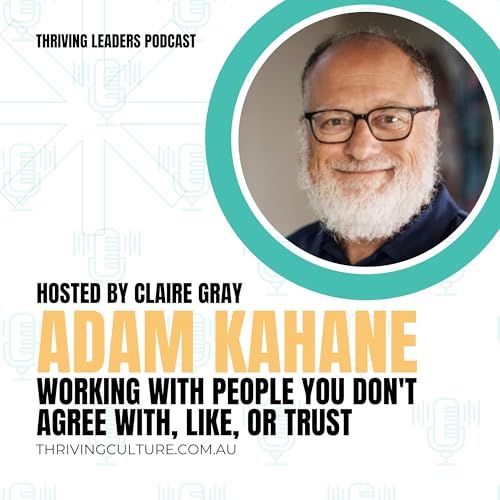
  • Working with People You Don't Agree With, Like, or Trust with Adam Kahane
    May 11 2026

    Most of us know the feeling. There's someone at the table we don't agree with, don't particularly like, or don't quite trust, and the situation isn't going away. Whether it's a difficult peer, a misaligned executive, a stakeholder relationship that's gone a bit stale, or a cross-functional partnership that feels like it's going nowhere, the instinct is often the same: work around it, avoid it, or wait it out. And as Adam Kahane will tell you, that rarely works.

    Adam Kahane is founding partner of Reos Partners, a global organisation specialising in collaborative approaches to complex challenges. Over more than 35 years, he has worked in over 50 countries supporting governments, corporations, and civil society through some of the world's most difficult situations, from the democratic transition in post-apartheid South Africa to peace processes in Colombia. He is the author of six books, including the newly revised Collaborating with the Enemy: How to Work with People You Don't Agree with or Like or Trust (Second Edition, 2025), which carries a foreword from Nobel Peace Laureate Juan Manuel Santos. Nelson Mandela described his earlier work as addressing "the central challenge of our time: finding a way to work together to solve the problems we have created".

    In this conversation, Adam unpacks why working across difference is becoming harder just as it's becoming more essential, and what leaders can actually do about it. We explore his concept of "enemyfying", the limits of conventional collaboration, and why the real breakthrough in any difficult collaboration is rarely about changing the other person.

    In this episode, we cover:

    • Why our capacity to work across difference is declining just as the need for it is increasing, and what's driving that gap
    • What "enemyfying" actually means, why we all do it, and why it's such an unhelpful starting point for getting anything done
    • The difference between conventional collaboration and stretch collaboration, and how to know which one your situation actually calls for
    • Why telling people to "think of the whole" or "leave your interests at the door" is often unrealistic, and in many cases manipulative
    • How complexity and conflict change the rules of collaboration entirely
    • The four options we have in any difficult situation, and why collaboration is just one of them
    • What Adam calls "The Click", the turning point moment that shifts a stuck group toward real progress
    • The most practical thing you can do when you're tempted to keep telling someone they're wrong

    I loved Adam's framing that working with people we don't agree with, like, or trust is not a new idea at all. What's new is how much we've retreated from it, and how much the quality of our leadership, our teams, and our organisations depends on us getting better at it again.

    If this conversation resonated, share it with a leader or team navigating a difficult stakeholder relationship, a silo situation, or a collaboration that feels more stuck than it should be.

    Show More Show Less
    54 mins
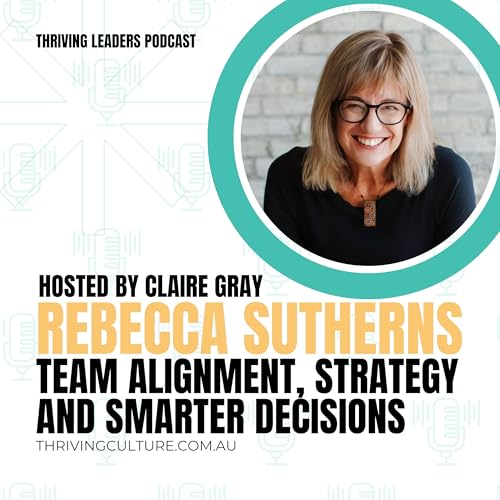
  • Rebecca Sutherns on Team Alignment, Strategy, and Smarter Decisions
    Apr 27 2026

    What if your team is using the same words, but imagining completely different futures? This conversation is a powerful reminder that alignment is not about sameness, it is about helping people see clearly, think together, and move forward with intention.

    In this episode, I’m joined by Rebecca Sutherns, trusted advisor, bestselling author, master facilitator, certified coach, and someone I deeply admire for the way she helps people unlock courage, clarity and momentum. With more than 25 years of experience, Rebecca works with mission-driven organisations to help leaders reimagine what’s next and get aligned on what matters most.

    In our conversation, we explore what it really takes to get people “watching the same movie” in teams and organisations. Rebecca shares why strategy needs more imagination, why leaders need to get clearer about the problem they are actually solving, and why waiting for perfect information can become the very thing that keeps teams stuck.

    This is such an important conversation right now because so many leaders are navigating complexity, competing perspectives, and decision fatigue. Rebecca brings a grounded, practical lens to all of it, and I think you’ll walk away with fresh ways to lead better conversations and better decisions. Let’s dive in.

    In this episode, we cover:

    • Why teams can use the same words but still be picturing completely different futures
    • How to create a vivid shared vision, not just another polished vision statement
    • Why “what problem are we solving?” is one of the most important questions a leader can ask
    • How to clarify decision-making criteria before people get attached to their preferred solution
    • Why waiting for full information is often just a stall tactic in disguise
    • How facilitation slows teams down at the beginning so they can move faster later
    • Why thriving teams do not just predict the future, they help create it

    I loved this conversation because Rebecca puts language to something so many leaders experience but struggle to name. My favorite part was her reminder that alignment is not about making everyone the same, it is about making thinking visible so people can understand each other, challenge well, and move forward with intention.

    The future does not just happen to teams. The strongest teams help shape it.

    If this episode resonated with you, share it with a leader, facilitator or executive team who is working through complexity and trying to make better decisions together.

    Show More Show Less
    52 mins
adbl_web_anon_alc_button_suppression_t1
No reviews yet