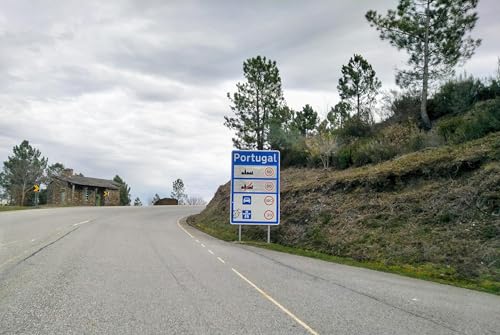
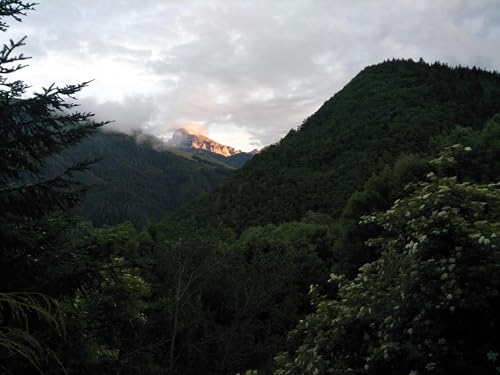
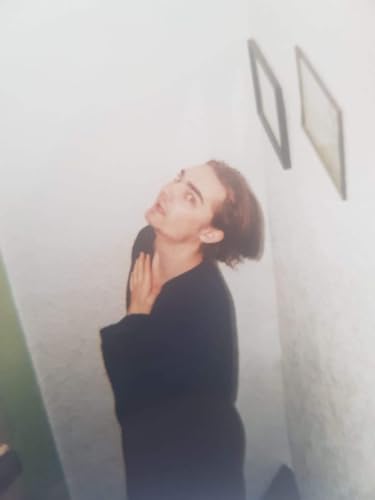
• Cercal, Portugal. May 2020.
    Jun 23 2026
    (After you have read these introductory paragraphs once, you can skip to the new/old content below. If you are listening, then the time stamp is around the two minute 45 second mark.)IntroductionThe word settled, to me, carries connotations I am keen to avoid. I have never felt settled or, perhaps, I cannot recall a time I felt settled. I do not feel settled now, writing this, and I’ve lived in the same house for three and a half years. Without even discussing the obvious issues of colonisation, I just don’t feel like I could, or should, settle; better to keep my constituent parts shook up, agitated perhaps, rather than separating and stagnant.Instead, I feel as though I have been travelling for years, maybe because I have not lived in my ‘home’ nation of Scotland for eight and a half years, perhaps because I know I won’t stay here forever, or maybe because I carry that concept of home in a way which differs from many?More precisely, I still think of myself as a slow traveller, globally feral. Recently, I have been revisiting places through the photographs and words I recorded when my feet crossed their soil. This is a way of reminding myself of where I have been, not just in space and time, but in mind, too. It is a wonderful thing, to come out of a low and rediscover myself through words I crafted, through the lens of a camera, when memory has wandered in the fog for too long. Thank you, past me.When I first started sharing letters with the world in this fashion, six or more years ago, I usually began them with a vignette of where I was, a sort-of travel diary, mixed with nature observation, locking in the setting for the reader, before I spoke of other things—and, by so doing, ensuring that place fed into the whole. It was a useful device, for reader and myself both but, as these letters were sent to so few readers, and now languish archived behind a paywall, I thought it a shame not to share these snippets again.As such, I am going to share a short series of these sketches, accompanied by a photograph from that time, sent to you in date order.I shall include the above paragraphs in each of the letters in this series, but I shall also include a link at the very start, so you can skip ahead once you are familiar with the above words. If you are listening and similarly want to skip, then the timestamp you want to navigate to will be in the same place.Taken without these paragraphs, each is a short read, and I hope you enjoy them.Cercal, Portugal. May 2020.I have now lived in Portugal for nearly two months. I am taking the definition of “lived” as having been in the apartment, not the time spent on the road in January and February, exploring. This is a decent stretch of time to begin to draw some conclusions about a place, albeit with the caveat of lockdown and life being a little different in this day and age. It is, for example, very difficult to find friends or a community without the ability to move around.I originally started this section in long-form, writing paragraphs and explanations about each item on my list. However, as I am wont to do, it turned into a giant essay. Perhaps a bulleted list is more palatable:* Clouds, oh the clouds, the colours, the shapes, the movement.* The wind—an old, close friend, and how I have missed her.* Swiftly changing weather.* Warm sun and lots of it.* The quality of the light, indoors and out. I was spoilt by this, growing up in Orkney and later living in Caithness—but have missed it in Chiang Mai and SE Asia— here is similar to the north of Scotland, there’s just something about the air. Which leads to…* The air quality. It is so fresh, so pure, it is a joy and my lungs are so very thankful. The ocean winds keep it moving.* Unheated (other than by a fireplace) homes, wearing woollen clothes and hats inside, the evenings scented by woodsmoke.* The wealth of insect life, that crucial building block for a healthy ecosystem.* Birds everywhere. Their song a constant soundtrack to the day. The clattering of the storks, screaming swifts and squabbling sparrows just some of them.* Wildflowers in an abundance and variety I do not believe I have ever actually witnessed (the Machair in South Uist comes close for spectacle, but there are more species here). Makes me ashamed of the relative desert some parts of the UK have become.* The smell of the place—whether the eucalyptus plantations, the dry burnt scent of the pine trees, the woody deep smell of the cork oaks, the labdanum oleoresin of the brown-eyed rockrose, or the many different tendrils of flower perfume.* Portuguese blended coffee is surprisingly good. Really, very good.* The wine is an astonishing revelation. So much depth, richness, and flavour.* The wine labels are just as delicious, beautiful artwork often featuring local nature.* The unexpected joy at watching a roof being taken down and a new one put back up, using techniques I doubt have changed in a long, long time (chainsaw ...
    Show More Show Less
    7 mins
  • Cercal, Portugal. April 2020.
    Jun 16 2026
    (After you have read these introductory paragraphs once, you can skip to the new/old content below. If you are listening, then the time stamp is around the two minute 45 second mark.)IntroductionThe word settled, to me, carries connotations I am keen to avoid. I have never felt settled or, perhaps, I cannot recall a time I felt settled. I do not feel settled now, writing this, and I’ve lived in the same house for three and a half years. Without even discussing the obvious issues of colonisation, I just don’t feel like I could, or should, settle; better to keep my constituent parts shook up, agitated perhaps, rather than separating and stagnant.Instead, I feel as though I have been travelling for years, maybe because I have not lived in my ‘home’ nation of Scotland for eight and a half years, perhaps because I know I won’t stay here forever, or maybe because I carry that concept of home in a way which differs from many?More precisely, I still think of myself as a slow traveller, globally feral. Recently, I have been revisiting places through the photographs and words I recorded when my feet crossed their soil. This is a way of reminding myself of where I have been, not just in space and time, but in mind, too. It is a wonderful thing, to come out of a low and rediscover myself through words I crafted, through the lens of a camera, when memory has wandered in the fog for too long. Thank you, past me.When I first started sharing letters with the world in this fashion, six or more years ago, I usually began them with a vignette of where I was, a sort-of travel diary, mixed with nature observation, locking in the setting for the reader, before I spoke of other things—and, by so doing, ensuring that place fed into the whole. It was a useful device, for reader and myself both but, as these letters were sent to so few readers, and now languish archived behind a paywall, I thought it a shame not to share these snippets again.As such, I am going to share a short series of these sketches, accompanied by a photograph from that time, sent to you in date order.I shall include the above paragraphs in each of the letters in this series, but I shall also include a link at the very start, so you can skip ahead once you are familiar with the above words. If you are listening and similarly want to skip, then the timestamp you want to navigate to will be in the same place.Taken without these paragraphs, each is a short read, and I hope you enjoy them.Cercal, Portugal. April 2020.One thing the guidebooks rarely mention is the shadow of a large bird, in this case, the white stork (Ciconia ciconia)—how it plays across a landscape, adding another, different dimension to the view. There is a dichotomy about the stork; one moment it shines, bright and flashing in the sun, then it is higher and dark, a silhouette gliding on and on. As the birds leave the nest, or approach on their flightpath to land, they have a counterpart—the shadow stork. This darker bird, a twin of the silhouette, flits from white building to clay tiled roof and back again, crossing cobbled street and azure-painted detailing or bright, geometric azulejos in between, rippling across the world below, silent, leaving not a trace, other than a brief absence of the warmth and light from the sun.I am learning much about storks. Although, at the time of writing, we have not seen “our” storks on their nest for a day or so. I really hope they haven’t abandoned it (LATER EDIT: One of the birds is on the nest, right now, which makes us happy—I wonder if they hid from the rainstorms?).As detailed elsewhere, I am also learning about the strata of this village—being mostly inside of late (yes, the viral elephant in the world again) means I do ensure I take the time to look out. The views on both sides of our apartment are wonderful and, if I take the right amount of time, they reveal the secrets of the local nature.Admittedly, the idea of being able to walk and cycle and explore free in the countryside around is playing on my mind. I’m looking forward to the things we’ll see, the signs we’ll find—a feather here, a bone there, a string of tracks or a hair caught in the bark. However, signs can also come to me. Today, something airborne and feathered kindly deposited part of a bone on our balcony. I think it is probably from a lamb, but I may be wrong. I have found several websites with details of local wildlife and nature, such as here and here, if you are interested (Great Bustard! Iberian Pond Turtle! Iberian Mongoose! Rüppell’s Griffon!)?One final thing, also on the subject of nature—I am thrilled to once again have a view which is split between the land and the sky. It has been a while since I have lived somewhere with such a view available at all times and I did not realise how much I have missed a lively sky. Being so close to the ocean means there are clouds skipping here, slowing there. There are mornings where I look outside ...
    Show More Show Less
    7 mins
  • Northern/Central Portugal. January, 2020.
    Jun 9 2026
    NOTE: If you are enjoying this series of memories and didn’t see it, I shared a letter with 49 (or more, if I’m honest) of my favourite scents. This has several little scenes in there, not dissimilar to Witness Notes, and you might enjoy reading or listening to that, too:(After you have read these introductory paragraphs once, you can skip to the new/old content below. If you are listening, then the time stamp is around the two minute 45 second mark.)IntroductionThe word settled, to me, carries connotations I am keen to avoid. I have never felt settled or, perhaps, I cannot recall a time I felt settled. I do not feel settled now, writing this, and I’ve lived in the same house for three and a half years. Without even discussing the obvious issues of colonisation, I just don’t feel like I could, or should, settle; better to keep my constituent parts shook up, agitated perhaps, rather than separating and stagnant.Instead, I feel as though I have been travelling for years, maybe because I have not lived in my ‘home’ nation of Scotland for eight and a half years, perhaps because I know I won’t stay here forever, or maybe because I carry that concept of home in a way which differs from many?More precisely, I still think of myself as a slow traveller, globally feral. Recently, I have been revisiting places through the photographs and words I recorded when my feet crossed their soil. This is a way of reminding myself of where I have been, not just in space and time, but in mind, too. It is a wonderful thing, to come out of a low and rediscover myself through words I crafted, through the lens of a camera, when memory has wandered in the fog for too long. Thank you, past me.When I first started sharing letters with the world in this fashion, six or more years ago, I usually began them with a vignette of where I was, a sort-of travel diary, mixed with nature observation, locking in the setting for the reader, before I spoke of other things—and, by so doing, ensuring that place fed into the whole. It was a useful device, for reader and myself both but, as these letters were sent to so few readers, and now languish archived behind a paywall, I thought it a shame not to share these snippets again.As such, I am going to share a short series of these sketches, accompanied by a photograph from that time, sent to you in date order.I shall include the above paragraphs in each of the letters in this series, but I shall also include a link at the very start, so you can skip ahead once you are familiar with the above words. If you are listening and similarly want to skip, then the timestamp you want to navigate to will be in the same place.Taken without these paragraphs, each is a short read, and I hope you enjoy them.Northern/Central Portugal. January, 2020.I have always covered distance, at least since I was eight and our first long drive up to Orkney from the flatlands of Lincolnshire, the only home I had known before this. Covering distance is not simply a matter of miles or kilometres, it is also time. Time and space combine in a journey, weave through one another until a whole is achieved, wrapped in an ongoing, continuous spiral of things seen. First this side, then the other, then above, below, in front, behind. The faster the speed, the more complex this weave becomes, the more gaps appear.On that first journey north, back in the mists of time, when the world was still young and I was too, I caught my first glimpse of an oystercatcher. It was dead, on a road in the far north close to where the MV St. Ola would carry us across the Pentland Firth, white and black feathers a monochrome backing for the blaze of sudden orange on its beak and legs. Since then, I have seen several other firsts in an equally macabre fashion. My first badger. Dead. My first polecat, dead.These thrills of recognition are always tempered by the simple fact of the death itself. I remember reading once that seeing dead badgers on a road is a good sign (or, at least, as good as any roadkill can be), as it suggests a healthy population with wide-ranging youngsters who do not yet know the dangers of a road. Personally, I’d prefer it without any cars or fast roads, a view which often raises eyebrows and incites laughter. Yet, look back just one hundred years, and our roads were still mostly unready and unpaved for the automobile. There may well come a time yet when this is once more the case.Many of the roads I have seen in the last few weeks seem to still be in a permanent state of unreadiness. Strips of land clinging to the side of a precipitous hill, or following a seemingly tortuous route through valley bottoms, mirroring the watercourse beside. These roads, these hints of roads, here in Portugal, were not made for cars, as they were not in many places across Europe. These roads are old. They remember the cart, the horse, the donkey, the tread of the sheep and their attendants, the vagabond, the roamer, the ...
    Show More Show Less
    7 mins
  • A Celebration of Scent: 49 Favourites
    Jun 8 2026
    A while ago, back in March, Sarah Crowder shared a list she’d crafted about 41 of her favourite smells. (She is certainly charmed, having a birthday on the 21st of March. There’s power in that.)At the time, I thought this a great idea, and set myself the challenge of doing likewise once I reached the semi-mystical age of 49 years. Since, I have been keeping notes on this and, a few weeks after my birthday, it’s time to share my own list, in no particular order. (Note: I’d originally intended to do similarly to Sarah, a note listing things but then, as I kept my list of ideas, it turned into an obvious post.)I try not to include anything too universally admired (it’s hard, though, and I’ve sneakily snuck some of those smells into others below. There’s no petrichor, though, which is a shame).Before we begin with my own, here’s Sarah’s excellent list, with a frankly fantastic photograph (I’ve illustrated my own piece with photos of my own, linking to some of the scents I’ve shared):Finally, before we begin, I’m not including any scents deemed too adult by nature, as I know some of you might not appreciate that (also, my Mum reads this, hi Mum!). I’ll let your own imaginations fill in the blanks on these. Blimey! Your head went there?! (Shut up, Alex—Ed.)(This post might be cut short in some email clients, so do make sure you read it all!)The List. 49(+) Favourite Scents. 1. The scent of webbing straps left out in the forest. For example, those of my hammock and that of my wildlife trail camera. They absorb something of the spirit of a tree, something not quite bark, nor moss, but beyond both. 2. Similar to this, the scent of my principal tarp, the one I used for my extended stays out in the woods. It is rich in campfire notes, with hints of the forest itself, rain, sun, wind, cold and heat, falling leaves and fragments of lichen. Made from a sort of poly cotton, over the years the material has become something else, grown into a Thing, with a scent of its own. 3. The particular smell of knapping and abrading a flint. I think I prefer this to the scent derived from striking a light from a flint, but that is also delicious. 4. The dark rocks of the cove by Little Burrageo in Deerness, when there has been sunshine for three days and little wind. A rare phenomenon in Orkney, this warms them and traps and distills the sea and land and, particularly, the coast into one distinctive smell. It has top notes of crumbling sandstone, iodine, and salt, with a rich body derived from the more volcanic, harder rock. Other places on the same coast don’t quite capture the same depth of scent and, when I lived near there, if they did have the scent, it would have been lost beneath tonnes of guano from the tens of thousands of seabirds who used to nest there. Last time I visited in spring, those cliffs lay comparatively silent, many of the birds dead or gone northward. 5. Evening, night-blooming jasmine, and frangipani, after a hot tropical day. Before the night mosquitoes appear in force, but as the day ones are going to bed. 6. Old books, obviously but, to make it a little more personal, I’ll be a touch more specific—the scent of a particular journal, once a chunky ledger for a company back in the 1800s, a company who only filled in five pages of 2000+, before abandoning that ledger. Now, it has been passed to me and, every time I open her, the scent is transporting. And, if I’m honest, a little off-putting. I want to use her pages, fill her in some way, but I’ve yet to quite learn how and I find the ancient smell akin to an elderly mystic sitting silently and peacefully, yet somehow also judging me. 7. Tulsi I’ve grown, harvested, and dried myself. Particularly Ethiopian tulsi. It is a bit tutti-frutti, a bit sharp, a bit wonderful, all its own thing. 8. Otter spraint, or poop. Yeah, I know, but to smell this as you walk a river or a coast is one of those times where the nose can sometimes confirm an animal before the other senses, and I love that. (See also—the scent of deer in a thick wood, but not the scent of wild boar, despite being an awesome thing, knowing they’re hiding up in that thicket, on that ridge, just from smell alone—it ain’t as nice as deer—and neither can touch the otter poop for sheer sort-of-jasmine nose joy.) 9. Givenchy Very Irresistible For Men. My go-to scent back in the mid 2000s through to the early 2010s, criminally deleted by the company, it fit me and my skin so well. Somewhat chocolatey, although the middle notes are actually coffee and sesame. Top notes included mint and grapefruit, with a base of Virginia cedar and hazelnut. Absolutely my favourite manufactured perfume for men, hands-down, and I mourn its loss still. (Honourable mention over the years for Issey Miyake L’Eau d’Issey pour Homme, and [vintage] Burberry Men [and, to a lesser extent, vintage Burberry Weekend for summer.]) These days, I wear nothing, have no added scent—I...
    Show More Show Less
    26 mins
  • Brough of Deerness, Orkney. Summer, 1995.
    Jun 2 2026
    (After you have read these introductory paragraphs once, you can skip to the new/old content below. If you are listening, then the time stamp is around the two minute 45 second mark.)IntroductionThe word settled, to me, carries connotations I am keen to avoid. I have never felt settled or, perhaps, I cannot recall a time I felt settled. I do not feel settled now, writing this, and I’ve lived in the same house for three and a half years. Without even discussing the obvious issues of colonisation, I just don’t feel like I could, or should, settle; better to keep my constituent parts shook up, agitated perhaps, rather than separating and stagnant.Instead, I feel as though I have been travelling for years, maybe because I have not lived in my ‘home’ nation of Scotland for eight and a half years, perhaps because I know I won’t stay here forever, or maybe because I carry that concept of home in a way which differs from many?More precisely, I still think of myself as a slow traveller, globally feral. Recently, I have been revisiting places through the photographs and words I recorded when my feet crossed their soil. This is a way of reminding myself of where I have been, not just in space and time, but in mind, too. It is a wonderful thing, to come out of a low and rediscover myself through words I crafted, through the lens of a camera, when memory has wandered in the fog for too long. Thank you, past me.When I first started sharing letters with the world in this fashion, six or more years ago, I usually began them with a vignette of where I was, a sort-of travel diary, mixed with nature observation, locking in the setting for the reader, before I spoke of other things—and, by so doing, ensuring that place fed into the whole. It was a useful device, for reader and myself both but, as these letters were sent to so few readers, and now languish archived behind a paywall, I thought it a shame not to share these snippets again.As such, I am going to share a short series of these sketches, accompanied by a photograph from that time, sent to you in date order.I shall include the above paragraphs in each of the letters in this series, but I shall also include a link at the very start, so you can skip ahead once you are familiar with the above words. If you are listening and similarly want to skip, then the timestamp you want to navigate to will be in the same place.Taken without these paragraphs, each is a short read, and I hope you enjoy them.Brough of Deerness, Orkney. Summer, 1995.I am partway up the cliff when I realise my mistake. Not climbing in welly boots, nor climbing without ropes—those are normal—but picking a route which takes me too close to a fulmar nest. Usually, I check this but, on this particular day I did not notice the bird, tucked into a ledge, away from view.I see the bird, the bird sees me and, as is the custom of fulmar, it leans forward to try and vomit a foul-scented mess on me. I lean back.Which is, of course, a mistake. Sticky, oily vomit or not—leaning back from a cliff face is unwise.The rock I was holding starts to come away, comically slow. It, like much of this cliff, was loose—held together on one plane, fractured on another. Like so many of us. Something pulls the wrong way, you come apart.I fall.It is not that far to the rocks below, but it is far enough to make me understand the gravity of the situation as I am weightless, attracted by gravity and thoroughly seen off by a cousin of the albatross family. Damn tube-noses.When I was young, Stenness Primary School had two classrooms—the Big End and the Peedie End. I was in the former, and my teacher at that time was the headmaster, writer, Orcadian scholar and collector of stories, Gregor Lamb.I remember a story he used to tell, one which seems fitting to slip into this piece, here. It took place not far from where I was falling, on the now-uninhabited island of Copinsay. A visitor to the island, perhaps someone connected to the lighthouse, or maybe someone visiting during the war years, when the population of Orkney became swollen like the corpse of a beached whale—I forget which—asked to go along with one of the families who still lived there, as they went to collect eggs.Now, collecting eggs in our modern parlance might sound quaint for many. It is something not too many city-based folk have done, after all and, in their mind, probably involves ducking into a chicken coop and plucking out the eggs neatly arranged there. As someone who has actually collected eggs, I can affirm that, yes, this is often the case but, quite often, it is considerably more work than that.The eggs have been hidden. The chickens do not want you to take them. You slip and end up sitting in chicken poop. You bang your head trying to escape the angry hen.However, in the case in point in this tale, the eggs were considerably more free range than this.Copinsay is gently sloping, rising up from the direction of Mainland Orkney and ...
    Show More Show Less
    8 mins
  • Isère, France. July, 2021.
    May 26 2026
    (After you have read these introductory paragraphs once, you can skip to the new/old content below. If you are listening, then the time stamp is around the two minute 45 second mark.)IntroductionThe word settled, to me, carries connotations I am keen to avoid. I have never felt settled or, perhaps, I cannot recall a time I felt settled. I do not feel settled now, writing this, and I’ve lived in the same house for three and a half years. Without even discussing the obvious issues of colonisation, I just don’t feel like I could, or should, settle; better to keep my constituent parts shook up, agitated perhaps, rather than separating and stagnant.Instead, I feel as though I have been travelling for years, maybe because I have not lived in my ‘home’ nation of Scotland for eight and a half years, perhaps because I know I won’t stay here forever, or maybe because I carry that concept of home in a way which differs from many?More precisely, I still think of myself as a slow traveller, globally feral. Recently, I have been revisiting places through the photographs and words I recorded when my feet crossed their soil. This is a way of reminding myself of where I have been, not just in space and time, but in mind, too. It is a wonderful thing, to come out of a low and rediscover myself through words I crafted, through the lens of a camera, when memory has wandered in the fog for too long. Thank you, past me.When I first started sharing letters with the world in this fashion, six or more years ago, I usually began them with a vignette of where I was, a sort-of travel diary, mixed with nature observation, locking in the setting for the reader, before I spoke of other things—and, by so doing, ensuring that place fed into the whole. It was a useful device, for reader and myself both but, as these letters were sent to so few readers, and now languish archived behind a paywall, I thought it a shame not to share these snippets again.As such, I am going to share a short series of these sketches, accompanied by a photograph from that time, sent to you in date order.I shall include the above paragraphs in each of the letters in this series, but I shall also include a link at the very start, so you can skip ahead once you are familiar with the above words. If you are listening and similarly want to skip, then the timestamp you want to navigate to will be in the same place.Taken without these paragraphs, each is a short read, and I hope you enjoy them.Isère, France. July, 2021.Moving through a natural woodland is different from passing through any other environment. You cannot rush, you cannot allow yourself to miss the little details. The more time you spend amongst the trees, the more you realise this and the quicker your pace alters: slow, slower, pause, repeat. Essentially, you return to a more natural state, a rhythm as old as our species itself.You listen, you look, these senses you already know well pulling in huge amounts of data. For most people, the vast majority of their information comes from sight and sound, but spend time in the woods and you learn to touch things—that tree bark, that rock or leaf, for example, you learn to inhale in a different way, deliberately sampling the air and all the varied perfumes it brings. You can even learn to taste that same air, or pick a leaf or fruit and chew.Then there are the senses we don’t always realise exist, let alone consciously utilise. Some of these can be a little unnerving when you first start to actively use and acknowledge them—some people call them a sixth sense which, quite frankly, is silly. We have far more than five senses, after all. Learning to listen to that little voice in your head, the one which tells you something is watching you, or that there’s something ahead on the trail, these things take time, but it is time which is well spent indeed.Of course, this isn’t supernatural at all, but simply your brain processing different information and picking up on tiny details you have consciously missed. Perhaps a change in the air brought a tendril of scent? We often fail to use our noses as we can—try it, now, sitting reading this, open your nostrils wide and inhale slowly and deliberately, you may be surprised what you can sample. Similarly, learning to snuffle like a dog at a scent trail is possible too, involving faster inhalation and sampling, your sense of smell actually being worked properly. Both these things can seem like strange magic, but also seek to remind us how civilisation can dull our own bodily functions.The woodland is a complex machine of many parts. It exists on different scales and even across time. I have walked across Scottish hillsides, devoid of any tree cover, but have known from the wide flourishes of native bluebells and anemones that I was walking through the ghost of a wood. If you look closely at the ground around you, you can often see small depressions, pockmarks from where trees were once blown over,...
    Show More Show Less
    9 mins
  • Isère, France. June, 2021.
    May 19 2026
    (After you have read these introductory paragraphs once, you can skip to the new/old content below. If you are listening, then the time stamp is around the two minute 45 second mark.)IntroductionThe word settled, to me, carries connotations I am keen to avoid. I have never felt settled or, perhaps, I cannot recall a time I felt settled. I do not feel settled now, writing this, and I’ve lived in the same house for three and a half years. Without even discussing the obvious issues of colonisation, I just don’t feel like I could, or should, settle; better to keep my constituent parts shook up, agitated perhaps, rather than separating and stagnant.Instead, I feel as though I have been travelling for years, maybe because I have not lived in my ‘home’ nation of Scotland for eight and a half years, perhaps because I know I won’t stay here forever, or maybe because I carry that concept of home in a way which differs from many?More precisely, I still think of myself as a slow traveller, globally feral. Recently, I have been revisiting places through the photographs and words I recorded when my feet crossed their soil. This is a way of reminding myself of where I have been, not just in space and time, but in mind, too. It is a wonderful thing, to come out of a low and rediscover myself through words I crafted, through the lens of a camera, when memory has wandered in the fog for too long. Thank you, past me.When I first started sharing letters with the world in this fashion, six or more years ago, I usually began them with a vignette of where I was, a sort-of travel diary, mixed with nature observation, locking in the setting for the reader, before I spoke of other things—and, by so doing, ensuring that place fed into the whole. It was a useful device, for reader and myself both but, as these letters were sent to so few readers, and now languish archived behind a paywall, I thought it a shame not to share these snippets again.As such, I am going to share a short series of these sketches, accompanied by a photograph from that time, sent to you in date order.I shall include the above paragraphs in each of the letters in this series, but I shall also include a link at the very start, so you can skip ahead once you are familiar with the above words. If you are listening and similarly want to skip, then the timestamp you want to navigate to will be in the same place.Taken without these paragraphs, each is a short read, and I hope you enjoy them.Isère, France. June, 2021.Everything is wet, everything is fresh and green, new and spring-like until, almost overnight, summer arrives. And she arrives with the subtlety of someone snatching you off the street, fully-clothed, and throwing you into a sauna. The mountain greening is complete, the summer bleaching coming.The valley in which Grenoble and Echirolles sit holds the heat and maintains the humidity. The pollution builds up here in summer, nowhere near as much as it did in Chiang Mai, but it is noticeable. Mountains are hidden, disappearing behind greying air, the blue leaching from the sky day by day, only to suddenly reappear, cleaned and fresh after a thunderstorm, as though someone has restored the painting. The air is close and full of energy.It is no wonder people leave the city for the coast or the mountains in summer. We shall be doing both.Outside the window the blackcap has started to sing once more, joined by the never-ceasing serin, the great tit, blackbird, sparrow, and collared dove. Sometimes, there are others, such as the black kite I witnessed almost crashing to the ground, mobbed by crows, twirling and dropping to escape. We have been visited by a kestrel, a sparrowhawk, a buzzard and my current favourite—the crested tit, punklike, carrying considerable attitude in a tiny frame.The scent of roses and peonies rises to my floor, my side of the house cooler than the other in the mornings, the air still relatively fresh. I cannot wait for the scent of the mountainside in the morning, or the taste of salt on my lips once more, the wind from the Mediterranean almost ever-present, reminding me of home, whatever that means.Each day, each month, season, and year creates a new tale of its own. There are always similarities with the previous chapters, but as time moves on, so does the story. Those robins nest in a different place, meaning their previous location is now available for the blackbird. That cherry tree is damaged by a late cold snap, encouraged to sleep longer, opening tentative leaves in the middle of June, long after the other two. This means the birds on the feeder are far easier to view. Covid means the shrubs and plants have been allowed to grow longer, wilder, more bushy along the pathways. This gives the birds and other animals more food, more shelter, more room to nest and nurture.Every day, a different story. Every year, different.Now, look at your own location and time, and consider the variables. A vast and incomprehensible ...
    Show More Show Less
    9 mins
  • Leicester, England. Autumn, 1998.
    May 12 2026
    (After you have read these introductory paragraphs once, you can skip to the new/old content below. If you are listening, then the time stamp is around the two minute 45 second mark.)IntroductionThe word settled, to me, carries connotations I am keen to avoid. I have never felt settled or, perhaps, I cannot recall a time I felt settled. I do not feel settled now, writing this, and I’ve lived in the same house for three and a half years. Without even discussing the obvious issues of colonisation, I just don’t feel like I could, or should, settle; better to keep my constituent parts shook up, agitated perhaps, rather than separating and stagnant.Instead, I feel as though I have been travelling for years, maybe because I have not lived in my ‘home’ nation of Scotland for eight and a half years, perhaps because I know I won’t stay here forever, or maybe because I carry that concept of home in a way which differs from many?More precisely, I still think of myself as a slow traveller, globally feral. Recently, I have been revisiting places through the photographs and words I recorded when my feet crossed their soil. This is a way of reminding myself of where I have been, not just in space and time, but in mind, too. It is a wonderful thing, to come out of a low and rediscover myself through words I crafted, through the lens of a camera, when memory has wandered in the fog for too long. Thank you, past me.When I first started sharing letters with the world in this fashion, six or more years ago, I usually began them with a vignette of where I was, a sort-of travel diary, mixed with nature observation, locking in the setting for the reader, before I spoke of other things—and, by so doing, ensuring that place fed into the whole. It was a useful device, for reader and myself both but, as these letters were sent to so few readers, and now languish archived behind a paywall, I thought it a shame not to share these snippets again.As such, I am going to share a short series of these sketches, accompanied by a photograph from that time, sent to you in date order.I shall include the above paragraphs in each of the letters in this series, but I shall also include a link at the very start, so you can skip ahead once you are familiar with the above words. If you are listening and similarly want to skip, then the timestamp you want to navigate to will be in the same place.Taken without these paragraphs, each is a short read, and I hope you enjoy them.Leicester, England. Autumn, 1998.The following paragraphs were a big part of the genesis for my Witness Notes series—the idea of sharing vignettes from my life, whether things originally shared via my earlier letters, years ago, or from former blog posts, my journals, notebooks, or memories.This one, I shared on Substack Notes on Hogmanay (New Year’s Eve), 2025, and it planted the idea of sharing more. I have not shared it as a Witness Note as yet, as I thought it perhaps too long, but I think it is now time to do so.A long time ago, a generation or more (depending on whose definition of generation you take, of course), I found myself waiting for a train from Leicester to Derby. I was with my housemate, and we were, for all intents and purposes, cosplaying Down And Out In The Midlands (of England). During that time, Orwell would have recognised our situation and circumstances and nodded, before returning to scrubbing his dishes or tramping along ancient routes circling and spiralling out from London Town.On this day, we decided to risk the money for the train tickets and spend it in a bar near the station, instead. At that time, we often had to choose between eating, or drinking coffee and smoking cigarettes. Sometimes, we’d espouse both in favour of cheap alcohol.The bar had a pool table and, because it was mid-morning and no one else was there, the barman let us play for free. We’d bought pints of local bitter and a bag of crisps each for breakfast, and he seemed a benevolent sort, chatting amiably for a time, until he went to check the lines on a couple of barrels. We did not sit down, those chairs and benches looked like they were heavily impregnated with the ash and tar of centuries. The smell, I’m sure some of you remember—I do not miss that.We were busy talking about whether we should somehow move to Berlin, rather than Derby, how we needed more experience of different places to be able to write deeply, with a richness which comes from travel and excitement when the door opened and a man walked in.I’m sure you’ve probably met people like him. One look, and you know he is dangerous. Not the bluster and swagger of the gym-swollen and terminally lacking in sense, but the danger which comes from actually being dangerous. He glanced around the room quickly, noting there was no barman, looking us up and down, and that there was no one else there.We exchanged quick glances between ourselves, then said good morning and got back to the game at hand. ...
    Show More Show Less
    11 mins